[email protected]  · Aluminum Windows & Doors Manufacturer Since 1993
0%

Choosing the right Aluminium Entrance Door in 2026 requires more than comparing colour samples and online prices. Global buyers must examine climate, building use, installation quality, security hardware, and long-term maintenance. A slim profile may look elegant, yet it can perform poorly without a reliable thermal break. A large glass panel may brighten a hallway, but it also demands careful attention to solar gain and privacy.

Architect Ludwig Mies van der Rohe famously said, “Less is more.” This principle still guides many modern aluminium entrance door designs. Clean sightlines, concealed hinges, flush panels, and restrained hardware create a strong architectural impression. However, minimal appearance should not replace practical testing. Buyers should ask about air tightness, water resistance, wind performance, powder-coating durability, and replacement parts. Small details matter.

The best choice depends on location. Coastal homes may need enhanced corrosion protection. Cold regions require insulated frames and low-conductivity thresholds. Hot climates benefit from shaded glazing and suitable glass specifications. Commercial buildings may need heavier-duty closers, access control, and frequent-use testing. Residential projects often prioritise warmth, privacy, and simple operation.

This guide compares popular Aluminium Entrance Door types for international buyers in 2026. It considers pivot, hinged, sliding, glazed, panelled, and thermally broken systems. Not every fashionable design is a wise investment. Some product claims sound impressive but remain unclear without test certificates or installation evidence. That is where buyers should pause, question assumptions, and request measurable performance data before ordering.
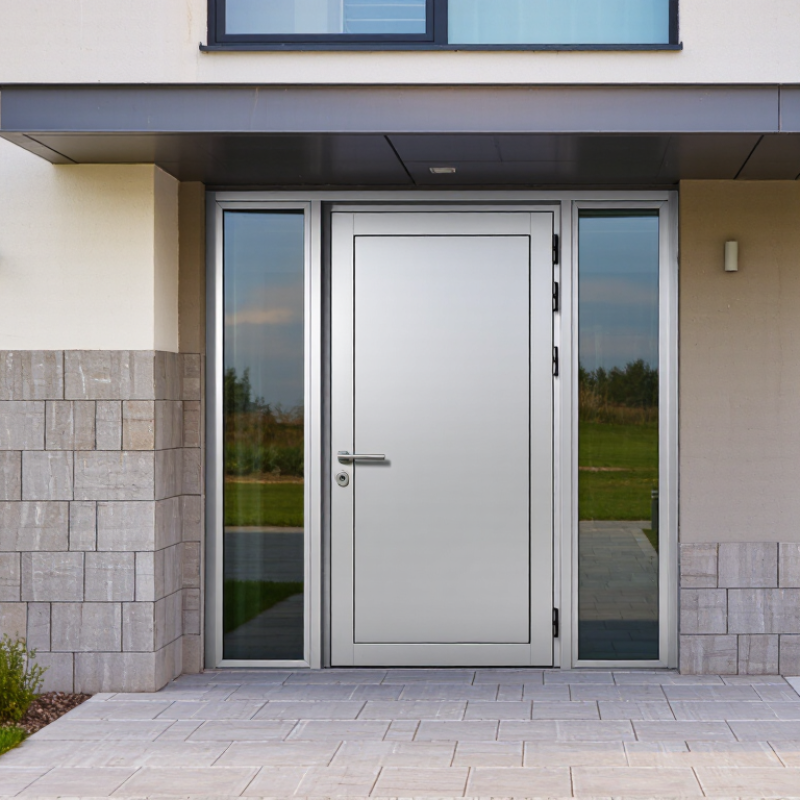
2026 Best Aluminium Entrance Door Types for Global Buyers?

Aluminium Entrance Door Basics and Key Performance Features

2026 Best Aluminium Entrance Door Types for Global Buyers

Aluminium entrance doors combine low weight, corrosion resistance, and flexible design. Start with the frame. Thermal-break systems use polyamide barriers to reduce heat transfer through the metal. This matters in both cold warehouses and hot coastal homes. The International Energy Agency reports that buildings consume about 30% of global final energy. Door performance therefore affects more than appearance.

A practical specification should include U-factor, solar heat gain, air leakage, and water resistance. Lower U-factor generally indicates better insulation. NFRC testing methods provide comparable thermal data, while EN 14351-1 supports European product assessment. Buyers should request laboratory test results, not only catalogue claims. Door panels with insulated cores, multi-point locks, compression gaskets, and adjustable hinges can improve comfort and security. Small gaps still matter.

Common types include single-leaf, double-leaf, pivot, sliding, and thermally broken glazed doors. Pivot doors create a strong architectural statement, but their hardware needs careful load calculation. Sliding doors save clearance space, though their seals may require more maintenance. The International Aluminium Institute states that about 75% of aluminium ever produced remains in use, supporting its long service potential. Yet recycled content does not automatically prove good performance. Installation quality, drainage, threshold height, and local wind exposure can change the result. Even a premium specification may fail when the opening is measured poorly.

2026 Best Aluminium Entrance Door Types for Global Buyers

Aluminium entrance doors are commonly selected by configuration, insulation level and opening format. The chart compares representative whole-door thermal transmittance values; lower U-values indicate better thermal insulation.

Thermally broken systems with insulated panels or triple glazing generally provide stronger thermal performance than non-thermally broken doors. Actual results vary with frame design, glazing, panel construction, hardware, installation quality and local test standards.

Main Aluminium Entrance Door Types for Different Building Needs

2026 Best Aluminium Entrance Door Types for Global Buyers

Main Aluminium Entrance Door Types for Different Building Needs

A single hinged aluminium door suits compact homes, apartments, and service entrances. It opens quickly and simplifies hardware replacement.

Double hinged doors create a wider passage for villas, hotels, and public buildings.

For a stronger architectural statement, pivot doors use a central mechanism and can carry larger panels. They need careful floor alignment, though. A small installation mistake becomes visible immediately.

Sliding and bi-folding doors work well where entrance space is limited. They support wide openings in retail units, offices, and mixed-use buildings.

Framed glass doors bring daylight into darker lobbies, while insulated aluminium panels improve privacy and thermal comfort. Thermal breaks matter in cold or hot climates.

The UNEP Global Status Report for Buildings and Construction 2023 states that buildings consumed about 30% of global final energy in 2022. Door selection is only one factor, but poor sealing can still waste energy near busy entrances.

Global buyers should request tested air permeability, water tightness, wind resistance, and thermal transmittance data. Standards such as EN 14351-1 and regional equivalents help compare performance, but certificates must match the exact door system.

Coastal projects need corrosion-resistant finishes and suitable fasteners.

High-traffic buildings need replaceable seals and robust hinges.

The International Aluminium Institute reports that recycling aluminium uses roughly 95% less energy than primary production.

That supports material efficiency, although recycled content claims should be verified. Looks can mislead.

How to Compare Designs, Materials, Glazing, and Security Options

2026 Best Aluminium Entrance Door Types for Global Buyers?

Comparing an aluminium entrance door starts with climate, not appearance. Thermally broken frames reduce heat transfer through the metal profile. The U.S. Department of Energy reports that low-emissivity glazing can reduce window energy loss by 30–50%. That figure is useful, but it is not a door guarantee. Ask for whole-door U-values, air leakage results, and condensation testing. Triple glazing suits cold regions, while solar-control double glazing may work better in hot, bright climates.

Material thickness matters less than the complete system. Look for powder-coated or anodized finishes, reinforced corners, adjustable hinges, and replaceable seals. The International Aluminium Institute states that recycled aluminium requires about 5% of the energy used for primary aluminium production. Still, recycled content should be verified through a traceable environmental declaration. A visually slim door can feel weak if the lock area lacks reinforcement. I have seen attractive specifications hide this detail.

Tips: Compare EN 1627 resistance classes or equivalent local testing, not vague “high security” wording. Request test reports for cylinders, hinges, glazing, and the assembled door. Laminated glass can delay forced entry and reduce injury risk after breakage. Check whether the threshold supports accessibility and drainage. Small gaps become obvious during heavy rain. Also confirm hardware compatibility, warranty coverage, and replacement availability in your destination country. A perfect specification rarely exists; installation quality can still decide the real result.

Global Standards, Climate Factors, and Installation Requirements

2026 Best Aluminium Entrance Door Types for Global Buyers?

For most climates, thermally broken aluminium doors offer the safest starting point. A polyamide barrier reduces heat transfer between interior and exterior profiles. This matters in cold regions, where interior surfaces can collect condensation. It also helps hot-climate buildings limit unwanted heat gain. The UNEP 2023 Global Status Report states that buildings and construction produced about 37% of global energy-related emissions. Door performance is not the only solution, but it is part of a tighter building envelope.

Regional standards should guide product selection. EN 14351-1 addresses performance requirements for external pedestrian doors in many European markets. ISO 10077 supports thermal transmittance calculations for windows and doors. Australia and New Zealand commonly require testing under AS/NZS 2047, while North American projects may reference ASTM air, water, and structural tests. Buyers should request certified test results, not only catalogue claims. Standards differ. That assumption often fails.

Installation can decide whether a good door performs well. Coastal projects need corrosion-resistant finishes, sealed drainage paths, and compatible fasteners. Windy sites require structural calculations based on local wind loads. In tropical regions, shaded glazing and low solar-gain glass can reduce indoor heat. In cold zones, installers should insulate the frame perimeter and check the threshold carefully. A 3-millimetre gap may become a serious air leak. Poor alignment can also damage locks and seals within months. Field experience shows that the cheapest door is rarely the cheapest installed choice. Still, climate data and site testing should replace guesswork.

Buying Guide for Selecting Aluminium Entrance Doors in 2026

Choosing the right aluminium entrance door in 2026 requires more than comparing appearance and price. Start with the building’s climate, entrance size, and daily traffic. Hinged doors suit most homes and offices. Pivot doors create a wider opening but need stronger floor support. Sliding doors save space, although their tracks require regular cleaning.

Check the aluminium profile carefully. A thermal break improves indoor comfort in hot and cold regions. Powder-coated surfaces resist fading when properly maintained. Ask for tested air, water, wind, and security performance. For glass panels, laminated or double glazing can improve safety and insulation. Local installation standards also matter, because a good door can perform poorly when fitted incorrectly.

Tips: Measure the opening at several points. Confirm wall thickness before ordering. Request drawings, hardware details, finish samples, and written warranty terms. Coastal buyers should choose corrosion-resistant hardware and rinse exposed surfaces regularly. I have seen small drainage mistakes cause major maintenance problems. No checklist is perfect. Leave room for professional site inspection and future adjustment. A practical door should open smoothly, seal tightly, and remain easy to repair years later.

2026 Best Aluminium Entrance Door Types for Global Buyers

Buying Guide for Selecting Aluminium Entrance Doors in 2026

Door Type Typical Opening Configuration Recommended Application Typical Glazing Options Thermal Performance Guidance Weather and Security Considerations Main Advantages Potential Limitations Best Buyer Profile
Insulated Hinged Entrance Door Single or double leaf; inward- or outward-opening Residential entrances, apartments, villas, offices and commercial buildings Double or triple insulating glass; laminated or low-emissivity glass where required Thermally broken frames can commonly achieve approximately 1.0–2.0 W/m²K for the complete door, depending on size, glass and threshold design Look for multi-point locking, adjustable hinges, compression seals and a tested low-threshold drainage design Good balance of insulation, security, accessibility, design flexibility and cost Requires clear swing space; large leaves may need reinforced hinges and careful installation Most residential buyers
Thermally Broken Panel Entrance Door Usually a single hinged leaf with an insulated aluminium, composite or decorative infill panel Cold climates, high-privacy entrances, apartment buildings and energy-conscious homes Solid insulated panel, narrow vision panel or decorative laminated glass Insulated panels generally provide lower heat transfer than large glazed areas; verify the complete-door U-value rather than the panel value alone Check panel resistance to moisture, solar exposure, impact and dimensional movement; specify a high-security cylinder and reinforced lock area Excellent privacy, strong thermal potential, low visual obstruction and many surface finishes Less daylight; dark finishes may require attention to solar heat and thermal expansion Cold or privacy-focused projects
Sliding Entrance Door Two or more panels sliding horizontally on tracks Wide openings, patios, retail fronts, hotels and areas where swing clearance is limited Large double or triple insulating glass panels; solar-control glass may be needed in hot climates Thermally improved systems may achieve approximately 1.2–2.5 W/m²K for the complete door, subject to panel size and hardware Choose corrosion-resistant rollers, anti-lift devices, drainage channels and interlocking seals; weather performance is strongly system-dependent Saves floor space and provides broad views with convenient access Tracks require cleaning; perimeter sealing is generally more complex than on hinged doors Space-saving openings
Lift-and-Slide Entrance Door Large sliding panels lifted slightly from the seals before movement Premium residences, hospitality projects and very wide external openings Double or triple insulating glass, often with laminated or solar-control configurations High-performance thermally broken systems can commonly fall around 0.8–1.8 W/m²K for the complete door, depending on dimensions and glazing Specify load-rated rollers, anti-lift protection, robust interlocks and a threshold suitable for the local rain and accessibility requirements Handles heavy, large panels with relatively low operating force; excellent visual continuity Higher purchase and installation cost; requires accurate structural support and level tracks Large premium openings
Bi-Fold or Folding Entrance Door Multiple hinged panels folding and stacking to one or both sides Restaurants, event spaces, terraces, retail entrances and indoor–outdoor connections Double insulating glass; laminated safety glass is recommended for doors in impact-prone locations Complete-door thermal values commonly vary from approximately 1.2–2.5 W/m²K, with more frame joints increasing heat-transfer paths Review panel alignment, hinges, running hardware, finger protection, drainage and locking at the meeting stile Creates a very wide clear opening and offers flexible ventilation or access configurations More hinges and seals require maintenance; closed-door insulation and airtightness may be lower than a simple hinged door Flexible indoor–outdoor use
Pivot Entrance Door Large leaf rotating around offset floor and head pivots Architectural residences, hotels, galleries and statement commercial entrances Insulated aluminium panel, glass, timber-look infill or mixed-material construction Performance varies widely; large leaves and concealed pivots require a tested complete-door U-value and air-leakage result Confirm floor-load capacity, pivot adjustment, closing control, wind restraint, finger protection and emergency-egress compliance Distinctive appearance and suitability for exceptionally wide or tall leaves Usually more expensive; threshold, weather sealing and accessibility details need specialist design Design-led projects
Automatic Aluminium Entrance Door Usually automatic sliding or swing leaves activated by sensors, push pads or access-control systems Offices, healthcare facilities, retail, transport buildings and high-traffic public entrances Safety glazing, laminated glass or insulated glazing depending on climate and building use Thermal performance depends on the operator, frame, glazing and opening frequency; compare tested complete-door data Require safety sensors, emergency release, manual override, access-control compatibility and maintenance support Improves accessibility, hygiene and traffic flow; compatible with card, keypad and other access systems Needs electrical power, commissioning and periodic servicing; may have higher air leakage from frequent opening High-traffic buildings
Fire- or Smoke-Control Aluminium Entrance Set Usually single or double hinged leaves in a tested door-and-frame assembly Protected corridors, technical rooms, public buildings and projects with fire-compartment requirements Only glazing and hardware tested or approved as part of the required fire-rated assembly Fire rating is not interchangeable with thermal insulation; request the applicable fire, smoke and complete-door test classifications Use certified closers, approved seals, fire-rated hardware and installation by qualified personnel; local regulations govern acceptance Supports life-safety requirements while retaining aluminium construction and a clean appearance Design options, sizes, glazing and hardware are restricted by the tested assembly; cannot be specified from appearance alone Regulated commercial projects

Buyer’s note: Thermal values shown are indicative ranges for complete door assemblies and are not universal product ratings. Actual performance depends on frame depth, thermal-break design, door size, glazing, threshold, hardware, installation quality and local testing methods. Always request independently tested U-value, air-permeability, watertightness, wind-load, security, accessibility and fire-performance documentation applicable to the destination market.

FAQS

How should climate influence an aluminium entrance door choice?

Cold regions often benefit from thermally broken frames and triple glazing. Hot, bright climates may suit solar-control double glazing. Ask for whole-door U-values, not glass figures alone.

Does a thicker aluminium profile always mean a stronger door?

Not necessarily. The complete system matters more than thickness alone. Check reinforced corners, lock-area support, adjustable hinges, and replaceable seals. Thin-looking doors can hide weak reinforcement.

Which door design suits different entrances?

Hinged doors suit most homes and offices. Pivot doors create wide openings but need strong floor support. Sliding doors save space, though their tracks need regular cleaning.

What glass options improve safety and insulation?

Laminated glass can remain partly attached after breakage. Double glazing improves insulation in many climates. Ask for tested performance, because glass alone cannot represent the whole door.

How can buyers compare security performance responsibly?

Request recognized resistance testing or an equivalent local standard. Review reports for the cylinder, hinges, glazing, and assembled door. Vague claims are not enough.

What should buyers inspect before ordering?

Measure the opening at several points. Confirm wall thickness and threshold details. Request drawings, hardware specifications, finish samples, and written warranty terms. Small measuring errors can become expensive.

How important is professional installation?

It can decide the real result. Poor fitting may cause air leaks, water entry, or difficult operation. A good door can still perform badly. This deserves more attention.

What maintenance issues should global buyers consider?

Coastal locations need corrosion-resistant hardware and regular surface rinsing. Keep sliding tracks clear. Check drainage, seals, and hinges periodically. Also confirm replacement parts in the destination country.

Is recycled aluminium automatically the better choice?

Recycled aluminium generally uses much less production energy. Verify recycled content through a traceable environmental declaration. Environmental claims need evidence. I would not rely on appearance alone.

What makes an entrance door practical over time?

It should open smoothly, seal tightly, and remain repairable. Confirm warranty coverage and future adjustments. No checklist catches every site problem, so inspect conditions carefully.

Conclusion

This guide explains the essential features of an Aluminium Entrance Door, including strength, corrosion resistance, thermal efficiency, weather protection, durability, and low maintenance needs. It reviews major door types for residential, commercial, institutional, and high-traffic buildings, such as hinged, sliding, pivot, folding, and thermally broken systems. Readers will also learn how door design, frame construction, finish, glazing, seals, hardware, and locking solutions affect appearance, comfort, energy performance, privacy, and security.

For global buyers in 2026, selecting the right Aluminium Entrance Door requires attention to local climate, wind and water exposure, temperature changes, building codes, accessibility expectations, and installation conditions. The guide outlines practical ways to compare materials, glass configurations, opening styles, safety features, warranties, customization options, delivery requirements, and after-sales support. By balancing performance, design, budget, and long-term maintenance, buyers can choose an entrance solution that suits the building’s function and regional requirements.

Evelyn

Evelyn

Evelyn is a dedicated marketing professional with a strong understanding of our company’s products, services, and the needs of the customers we serve. With a background in market research, content strategy, and professional communication, Evelyn translates complex product information into clear,......