In 2026, aluminium entrance doors are becoming sharper, smarter, and more climate-conscious. Global buyers want attractive designs that also perform reliably in daily use. This guide explores the leading Aluminium Front Door styles for modern homes, apartments, offices, and hospitality projects.
In practice, the best choice depends on more than appearance. Coastal homes may need stronger protection against salt exposure. Cold regions require careful attention to thermal breaks, glazing, and weather seals. Hot climates may benefit from powder-coated finishes, shaded panels, and low-energy glass. We will examine pivot doors, slim-frame designs, wood-effect finishes, glass combinations, and oversized entrance systems. Each option offers a different balance of privacy, daylight, security, maintenance, and installation cost. Small details matter. A handle can change the door’s character. Poor drainage can undermine an otherwise excellent frame.
Reliable purchasing also requires evidence. Buyers should review system specifications, coating information, hardware quality, warranty terms, and local installation experience. Certified performance data is useful, but site conditions still matter. No design performs perfectly everywhere. That deserves more attention than many glossy product pages provide.
This article connects visual trends with practical decisions. It considers what manufacturers, architects, installers, and homeowners should check before ordering. Clear dimensions, opening direction, threshold design, and delivery protection can prevent expensive mistakes. The goal is not to promote one universal style. It is to help global buyers choose an Aluminium Front Door that looks distinctive, suits its environment, and remains dependable for years. Good design begins with honest questions.
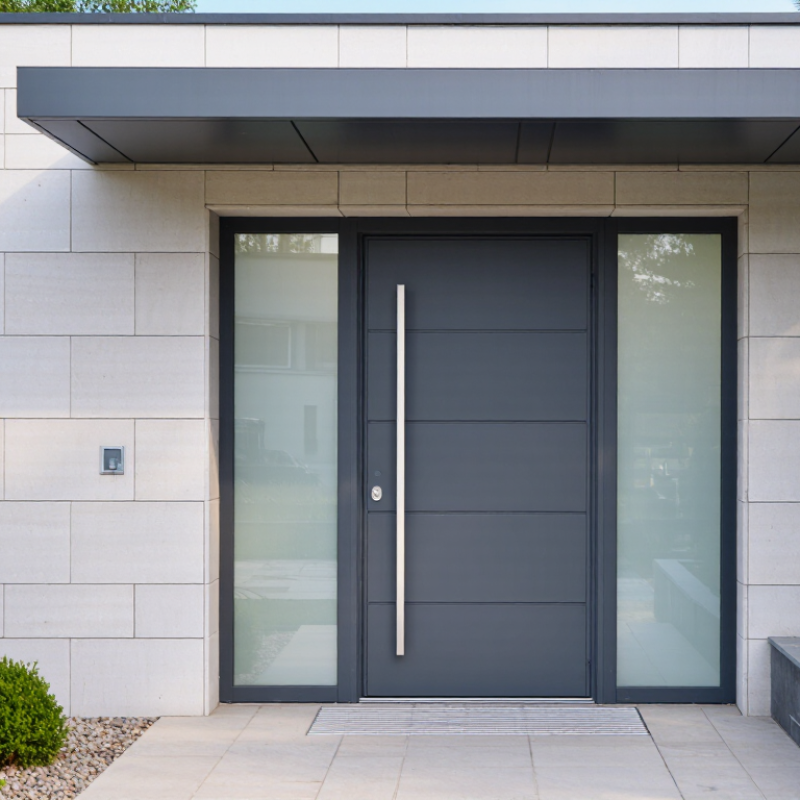
What Defines a Modern Aluminium Front Door in 2026
A modern aluminium front door in 2026 is defined by performance, not decoration alone. Global buyers increasingly expect slim sightlines, thermal insulation, secure hardware, and quiet operation. The International Energy Agency reports that buildings consume about 30% of global final energy. Therefore, a front door should support the building envelope, not merely decorate it.
Thermal breaks now separate interior and exterior aluminium sections, reducing cold bridging and condensation risks. Low-emissivity glazing can improve comfort beside the entrance. Air leakage also matters. Small gaps around the frame may create noticeable drafts during winter. In project reviews, I would check the whole assembly, including seals, thresholds, glass, and installation details. A beautiful panel cannot repair a badly fitted frame.
Material responsibility is another defining feature. The International Aluminium Institute states that recycled aluminium requires roughly 5% of the energy used for primary aluminium production. Buyers should request recycled-content evidence and credible environmental documentation. Powder coating offers broad colour choices, but coastal projects need carefully selected finishes and drainage paths. Dark colours look refined. They may also absorb more solar heat, especially under strong sunlight. This is an easy detail to overlook. The 2026 door is not perfect; it is better specified, measured, and questioned before purchase.
FAQS
It combines slim sightlines, thermal insulation, secure hardware, quiet operation, and verified performance. Looks matter, but decoration alone is not enough.
A thermal break separates the inner and outer aluminium sections with an insulating strip. This reduces heat transfer, condensation, and cold spots around the entrance.
Yes. Review the frame, panel, glass, seals, threshold, hinges, and installation details. A beautiful panel cannot fix a badly fitted frame.
Low-emissivity double glazing can improve comfort beside the doorway. Triple glazing may suit colder regions, but heavier glass needs stronger hinges and accurate fitting.
Textured powder coatings, anodised surfaces, and wood-effect finishes offer varied appearances. Coastal homes need suitable pretreatment, corrosion testing, and reliable drainage paths.
They can look refined, but dark surfaces absorb more solar heat. Shading and solar-reflective finishes may reduce overheating near sunny entrances.
It is extremely important. Poor fitting can cause drafts, water entry, difficult operation, and weak thermal performance, even with a high-quality door.
Ask for recycled-content evidence and credible environmental documentation. Recycled aluminium generally requires much less energy than primary aluminium, but traceability still matters.
Request tested thermal, acoustic, water, and air-performance figures for the exact configuration. Certification helps, but it cannot correct poor measurements.
Probably not. The best choice balances climate, appearance, security, maintenance, accessibility, and verified data. I would still question attractive drawings.
Conclusion
This guide explores what defines a modern Aluminium Front Door in 2026, focusing on clean architectural lines, durable construction, energy efficiency, and flexible design options for homes worldwide. It explains how aluminium grades, powder-coated and anodized finishes, thermal breaks, insulated panels, and weather seals influence appearance, comfort, longevity, and thermal performance. Readers will also discover leading door styles, including minimalist pivot, sliding, framed glass, flush-panel, and classic entrance designs suitable for different architectural settings.
The article compares essential buying considerations such as multi-point security systems, glazing choices, hinges, handles, smart-access compatibility, and accessibility features. It also outlines practical global purchasing factors, including regional performance standards, accurate measurements, packaging, shipping conditions, installation coordination, maintenance requirements, and after-sales support. By balancing aesthetics, safety, usability, climate resistance, and installation planning, buyers can make informed decisions when selecting an Aluminium Front Door for residential or commercial projects in diverse markets.