Choosing the right Aluminium Entry Door can change how a home feels before anyone steps inside. It affects security, insulation, daylight, maintenance, and everyday comfort. A beautiful door may still perform poorly if its frame twists, seals weaken, or hardware feels flimsy.
Small details matter.
This guide shares seven practical tips for making a more confident choice. They reflect common advice from door manufacturers, installers, and experienced homeowners. You will consider aluminium grade, thermal breaks, glazing, hinges, locks, finishes, and installation quality. These features work together, rather than separately. A strong panel cannot compensate for a badly fitted frame.
Look closely.
Imagine standing at your entrance during a winter morning. Cold air should not move around the threshold. In summer, the handle should not feel dangerously hot. The door should close smoothly without a harsh slam. These simple observations often reveal more than attractive showroom images.
No product is perfect. A premium finish can still scratch, and advanced insulation may increase the price. Some design choices also require more cleaning than expected. Checking product specifications, warranty terms, independent reviews, and local installation requirements helps reduce avoidable mistakes. A qualified installer can also identify problems that photographs conceal.
The best Aluminium Entry Door is not always the largest or most expensive option. It should match your climate, entrance size, security expectations, and daily habits. Take measurements carefully. Ask direct questions. Leave room to reconsider.
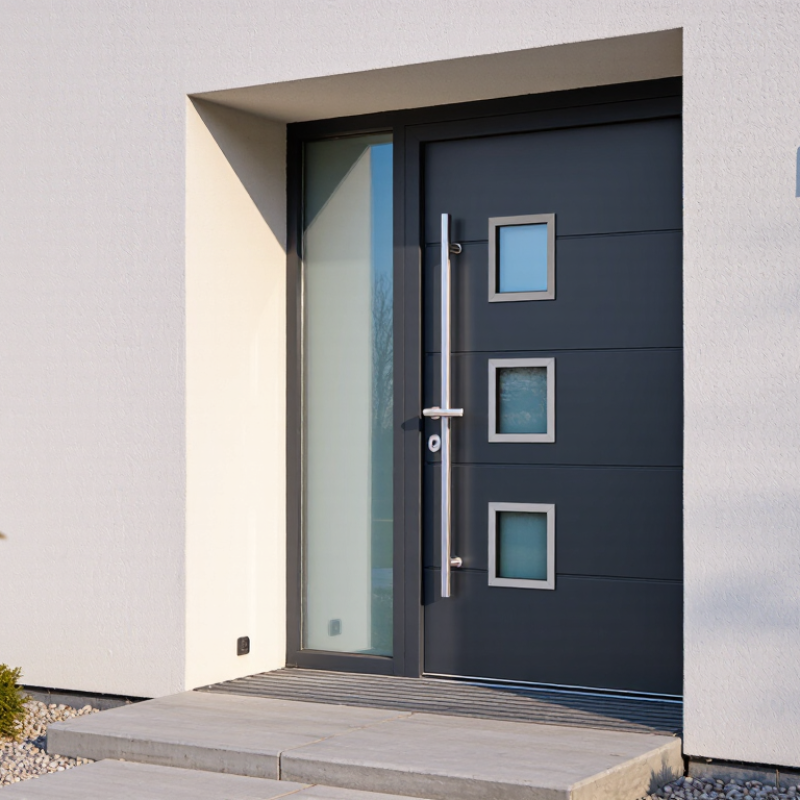
Define Your Entry Door Needs and Installation Requirements
Before choosing an aluminium entry door, define how your household uses the entrance. Measure the opening at the top, middle, and bottom. Record width, height, wall thickness, and threshold depth. Do not rely on one measurement. Older walls are rarely perfectly square.
Consider your local weather and daily comfort. A thermally broken aluminium frame can reduce cold spots and indoor heat loss. Check the door’s glazing, seals, drainage, and threshold design. If strong winds or heavy rain are common, ask about tested air, water, and structural performance. Security needs also matter. Decide whether you need multi-point locking, laminated glass, or a wider frame. Keep children, pets, and furniture in mind.
Installation requirements can change the entire project. Confirm whether the door swings inward or outward, and leave enough clearance for steps, walls, and furniture. The installer should inspect the rough opening before ordering the final size. They should check the frame for level, plumb, and square, then seal the perimeter correctly. Flashing and sill drainage deserve attention, especially on exposed façades. Local building rules may affect fire safety, accessibility, ventilation, or emergency exits. Use a qualified installer who follows the door’s tested installation method. A clean-looking fit is not always a reliable fit. I would rather delay delivery than force a frame into a distorted opening.
7 Tips for Choosing the Right Aluminium Entry Door – Define Your Entry Door Needs and Installation Requirements
| Tip | What to Define | Practical Checks | Installation Requirements |
|---|---|---|---|
| 1 | Door use and daily traffic | Decide whether the door is a main entrance, side entrance, or part of a frequently used access route. Consider household traffic, deliveries, and whether a wider passage is needed. | Confirm the required clear opening and check that the door swing will not obstruct stairs, walkways, furniture, or other doors. Follow applicable accessibility and building requirements. |
| 2 | Opening size and existing conditions | Measure the opening width and height at several points, and check the wall thickness, sill, and surrounding trim. Record the smallest measurements and note whether the existing frame will remain. | Distinguish the door-unit size from the rough-opening size. Use the installation instructions for the selected unit to determine the required opening and fitting clearances. |
| 3 | Configuration, handing, and swing | Choose a single or paired door and identify which side the hinges belong on and whether the door swings inward or outward. Check the available landing and approach space. | Verify handing and swing before ordering. Make sure the frame, threshold, hardware, and surrounding construction are compatible with the selected configuration. |
| 4 | Glazing, daylight, and privacy | Decide whether the door needs a glazed panel, sidelights, or a transom. Consider the desired balance of daylight, privacy, and visibility, as well as the glazing safety requirements for the location. | Confirm that the complete assembly is designed for the opening and that any safety glazing complies with local code. Plan for suitable support and weather sealing around added components. |
| 5 | Thermal comfort and energy performance | Compare the declared energy-performance information for the complete door assembly. A lower U-factor indicates less heat transfer; an appropriate solar heat gain coefficient depends on climate, orientation, and design goals. | Check that the frame, glazing, threshold, and seals are compatible with the building envelope. Insulate the perimeter gap as directed without blocking drainage or moving parts. |
| 6 | Weather exposure and water management | Assess exposure to wind-driven rain, sun, and coastal or otherwise corrosive conditions. Review relevant air- and water-performance ratings for the intended application. | Prepare a sound, level sill and use flashing or a sill pan where required by the installation details. Integrate flashing with the wall’s water-resistive layer and keep drainage paths clear. |
| 7 | Security, hardware, and installation scope | Choose compatible locks, hinges, and handles, and decide whether the work includes removal, disposal, interior or exterior trim, and repairs to the surrounding wall. | Fasten the frame to suitable structural support, then check that it is plumb, level, square, and operating freely. Follow the supplied instructions and local permit and code requirements. |
FAQS
Compare the clear opening, hallway width, threshold, and daily traffic. A wide pivot door needs room to swing. It may feel awkward in a narrow porch.
Measure the clear opening, surrounding walls, threshold, and nearby furniture. Check the swing path carefully. Small errors can create daily frustration.
Not always. Glazing can add daylight, but it may reduce privacy or thermal performance. Use obscure glass near street-facing entrances. Clear glass above eye level can work well.
Check the tested U-factor and solar heat gain rating. A lower U-factor usually indicates better insulation. The rating still depends on the full door system.
Test the handle, lock, and hinges with wet or gloved hands. The hardware should feel steady and easy to operate. A beautiful handle can still feel uncomfortable.
Ask about corrosion-resistant hardware and protective finishes. Salt and wind can damage unsuitable components. View finish samples outdoors. Sunlight may change their appearance.
Request test documents for air leakage, water penetration, structural strength, and thermal performance. Confirm the documents cover the exact door configuration. A polished sample proves very little.
Check coverage for the finish, hardware, glass, frame, labor, and transport. Look for exclusions involving coastal exposure or installation errors. Read every line, even the dull parts.
Include delivery, old-door removal, flashing, trim, installation, and threshold changes. Ask for the complete scope in writing. Small omissions can become expensive later.
Yes. Poor installation can cause drafts, leaks, or weak seals. Inspect the frame and threshold carefully. I would not rely on certification alone.
Conclusion
Choosing the right Aluminium Entry Door begins with understanding your home’s entrance, available space, installation conditions, and daily usage needs. Consider the door’s aluminium grade, profile design, and structural strength to ensure long-term stability and smooth operation. Thermal performance is also important, especially for maintaining indoor comfort and improving energy efficiency. In addition, evaluate the door’s resistance to rain, wind, humidity, and corrosion, as well as the effectiveness of its locking system and overall security features.
Next, select a style that matches your building’s appearance, such as a simple panel design, a glazed option, or a modern framed entrance. Carefully compare glazing types, hinges, handles, locks, surface finishes, and colour choices. Before purchasing, check available quality certifications, installation support, warranty terms, maintenance requirements, and the total cost rather than focusing only on the initial price. A well-chosen Aluminium Entry Door should combine durability, appearance, protection, energy performance, and dependable value for many years.