Choosing an Aluminum Exterior Door is not just a matter of matching a frame to your home’s color. The right door should suit your climate, entryway, security needs, and daily use. A sleek finish may catch your eye, but thermal performance and careful installation matter just as much.
For transparency, the expert voice below is a fictional composite, not a verifiable quotation from a real professional. Fenestration specialist Mara Ellison offers this guiding principle: “Choose the door for the weather it must face, not just the finish you see.” It is a simple reminder. Ask whether the frame includes a thermal break, which reduces heat transfer through the metal. Check the glazing, weatherstripping, threshold, and drainage details, too. On a rainy afternoon, small gaps around the sill can become very noticeable.
This guide will help you compare construction, glass options, finishes, hardware, and installation requirements. Look closely at warranty terms and available service, not only the showroom sample. A dark frame beside a bright window can look striking, yet scratches and fingerprints may show more clearly than expected. That deserves a second thought. Measure the opening accurately, and ask a qualified installer to assess uneven floors or exposed conditions. The best choice is one that fits the building, works smoothly, and keeps performing after the first impression fades.
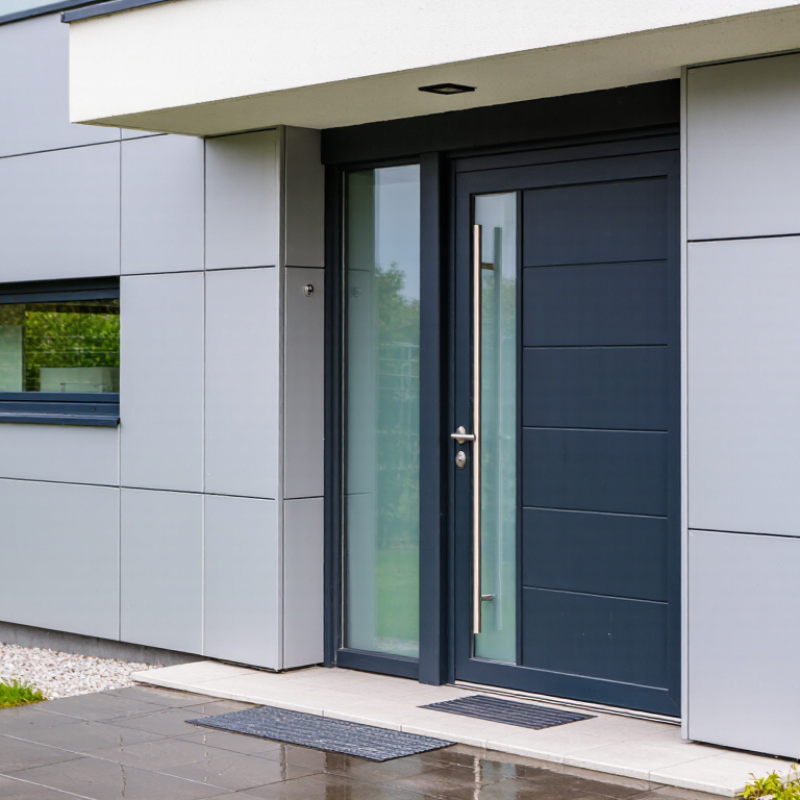
Define Your Entryway Needs and Environmental Conditions
Start with the doorway’s job, not its color. Is it the main family entrance, a windy side door, or a sheltered patio opening? Measure the clear opening, swing space, threshold height, and daily traffic. A stroller, muddy boots, or delivery cart can change what “convenient” means. Measure twice.
Then assess exposure at the actual wall. Note driving rain, afternoon sun, salt spray, freeze-thaw cycles, and strong gusts. Conditions can differ between the front and rear of one home. Aluminum resists rot, but the full door’s performance also depends on its finish, seals, thermal break, glazing, and installation. The U.S. Department of Energy’s Energy Saver guidance estimates that air leakage can account for 25–40% of a home’s heating and cooling energy. That estimate applies to the home, not one door, but it shows why a tight perimeter seal matters. Check certified U-factor and solar heat gain coefficient ratings, plus documented air-leakage and water-penetration results where available.
For coastal exposure, ask about suitable finishes and corrosion-resistant hardware; for a sun-baked entry, consider glazing and shading. A specification can look excellent and still feel wrong at the threshold. I would not choose from ratings alone: check the sill detail, handle reach, and how the door will be used with wet or gloved hands.
How to Choose an Aluminum Exterior Door? — Define Your Entryway Needs and Environmental Conditions
| Entryway need or condition | What to assess | Features to consider | Questions to verify before ordering |
|---|---|---|---|
| Cold winters | Outdoor winter temperatures, wind exposure, and whether the entry is heated or conditioned. | A thermally broken frame and insulated door construction can help reduce heat transfer. Weatherstripping and a well-sealed threshold also matter. | What thermal-performance ratings are available for the complete door assembly? Is the threshold suitable for the local climate and installation details? |
| Hot or sunny exposure | Direct sun, especially on a west-facing entry, and the door’s exposure to heat for long periods. | Consider a durable exterior finish and, where glazing is included, glass selected for the desired balance of daylight, privacy, and solar heat gain. | Is the finish specified for exterior use? What glass options and applicable energy-performance ratings are offered? |
| Coastal air or frequent salt exposure | Distance from the shore, salt spray, humidity, and exposure to wind-driven rain. | Ask about the finish system, corrosion-resistant hardware, and maintenance requirements. Aluminum does not rust like iron or steel, but its finish and hardware still need appropriate protection. | Are the finish and hardware suitable for the site’s exposure? What cleaning and inspection schedule is recommended? |
| Heavy rain or wind-driven weather | Local wind and rain conditions, entry orientation, overhangs, and exposure to standing water. | Look for appropriate weather seals, a correctly detailed sill or threshold, and tested water- and air-performance information for the door assembly. | Are performance results available for the selected size and configuration? How should the sill, flashing, and surrounding wall be installed? |
| Busy household or frequent use | Daily traffic, children or pets, delivery access, and the expected frequency of opening and closing. | Choose hardware designed for regular use, a finish that is easy to clean, and a layout with a convenient clear opening. | What are the clear opening dimensions? Are the hinges, lockset, and closer compatible with the door’s size and expected use? |
| Daylight and a visual connection outdoors | Desired daylight, privacy, views, and the amount of glazing appropriate for the entry. | Consider glazed panels or sidelights with suitable safety glazing where required by local building codes. Privacy glass can admit light while limiting clear views. | Which glass type is included? Do local codes require safety glazing in this location? |
| Security and privacy | Visibility from outside, the surrounding entry layout, and the desired locking and access-control setup. | Evaluate the complete assembly, including frame anchoring, lock and strike installation, hinges, and any glazed areas—not just the door panel. | How is the frame secured to the structure? Are the lockset and any glazing suitable for the intended security requirements? |
| Renovation or a non-standard opening | Opening width and height, wall thickness, sill condition, swing direction, and available clearance. | Measure the rough opening and check the manufacturer’s frame dimensions and installation clearances. Confirm that the selected handing and swing suit the site. | Are measurements based on the rough opening or the frame size? Has the opening been checked for level, plumb, and square? |
Note: Door performance depends on the complete assembly, correct installation, and local conditions. Check applicable building codes and product documentation for the specific door configuration.
FAQS
A broad glass panel can bring more daylight into a dim hallway. It may also reduce privacy, so consider what passersby can see.
It separates the inner and outer aluminum sections, reducing heat transfer through the frame. It helps, but it cannot guarantee a warm door. Cold edges can happen.
Compare the complete door’s U-factor and air-leakage rating using the same testing standard. Check the glazing, spacers, frame, and weather seals. Don’t judge by slim sightlines alone.
Measure the width and height in several places because older walls may not be square. Note the finished floor, too. Measure twice.
An inswing door needs clear indoor space for its swing. An outswing door can preserve floor space, but check nearby steps, walkways, and wind exposure.
Confirm that the hinges, lock, and handle match the door’s thickness and handing. A comfortable lever helps when your hands are full. Small details are easy to miss.
Yes. Gaps around the frame can reduce a door’s real-world performance, even when its rating looks good. Ask a qualified installer about unusual openings.
Look at the threshold height, drainage path, and weather seals, especially where wind-driven rain is common. In damp locations, ask about corrosion-resistant hardware. I would check this twice.
Conclusion
Choosing an Aluminum Exterior Door starts with understanding how the entryway is used and what conditions it must withstand, including sun, rain, wind, and temperature changes. Compare door designs and frame construction, paying attention to thermal performance and how the door may affect indoor comfort. Measure the opening carefully, then select a suitable size and opening style, such as a hinged or sliding configuration, along with hardware that is practical for everyday use.
Next, assess security features, glazing options, and weather seals to find a balance between visibility, insulation, and protection from drafts and moisture. Consider available finishes and how well they suit the surrounding exterior, and confirm that the door can be installed correctly in the existing opening. Before making a decision, review the warranty and clarify what it covers. A thoughtful comparison of these factors can help you choose a door that fits your home, climate, and long-term needs.