Choosing an entrance door involves more than appearance. For global buyers, a Modern Aluminum Entry Door must balance security, insulation, durability, and architectural character. It should withstand coastal moisture, intense sunlight, freezing temperatures, or heavy urban use. The right design also fits the building’s structure, local climate, and installation conditions.
Building-science expert Joseph Lstiburek often states, “A building is a system.” This principle applies directly to entry doors. A beautiful door can still fail when its frame, threshold, seals, glass, or wall connection are poorly matched. Experienced manufacturers therefore examine thermal breaks, drainage paths, multipoint locks, powder-coated finishes, and tested air and water performance. Small details matter.
The ten designs in this guide reflect practical global preferences. Expect slim frames, oversized pivots, concealed hardware, textured finishes, smart-access preparation, and energy-conscious glazing. Some doors create a quiet, minimal façade. Others use warm wood-look aluminum, deep bronze tones, or patterned glass to strengthen a property’s identity.
Yet no design is perfect. A larger glass panel may improve daylight but reduce privacy. A darker finish can look refined but absorb more heat. Automated access may feel convenient, but it still needs dependable manual operation. These trade-offs deserve honest review.
The best Modern Aluminum Entry Door is not simply the most expensive option. It is the one engineered for its environment, installed correctly, and maintained over time. For buyers comparing international suppliers, verified specifications and realistic project advice should guide the final decision.
What Defines a Modern Aluminum Entry Door
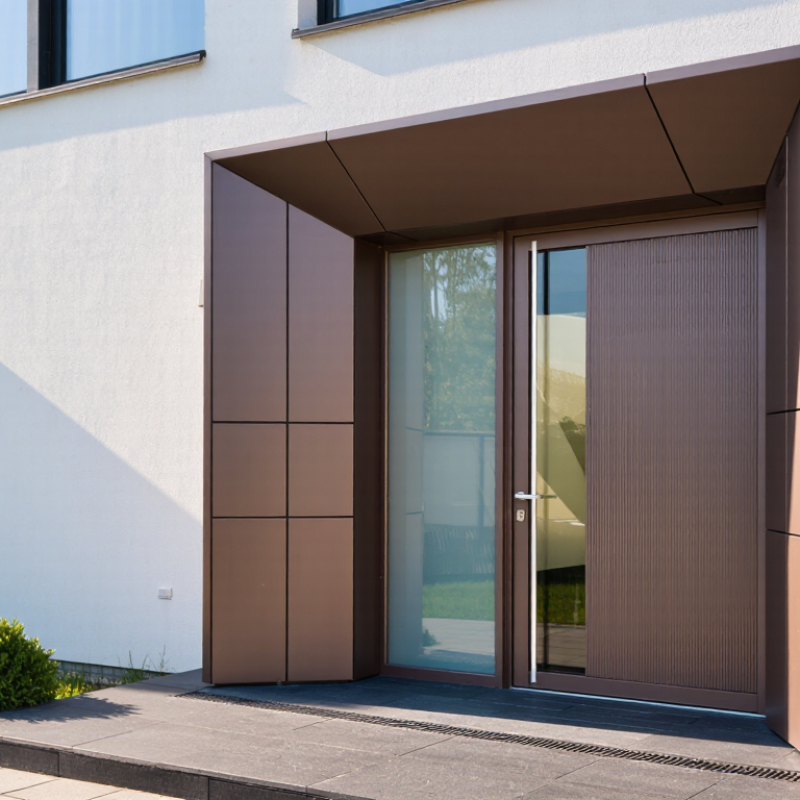
A modern aluminum entry door is more than a thin metal panel. It combines clean geometry, controlled light, and practical weather resistance. For global buyers, its definition changes with climate, building codes, and daily use. A thermally broken frame can reduce heat transfer between indoor and outdoor surfaces. This detail matters in hot cities and cold regions. It should feel calm. When I inspect a well-made door, I check alignment, corner joints, hinge movement, and gasket contact. These small points often reveal more than a glossy product image.
A contemporary design usually favors broad glass areas, narrow sightlines, and a restrained handle. However, minimal appearance should not weaken security or maintenance access. Laminated or insulated glass can improve safety, comfort, and indoor noise control. The exact choice should follow local regulations and the building’s exposure. Powder-coated aluminum resists common moisture damage, but surface care still matters near salt air. Keep drains clear. A reliable door also needs tested hardware, adjustable hinges, and seals that remain flexible over time. Specifications are useful, but installation decides much of the final performance.
For buyers comparing the top ten designs, ask for thermal data, air leakage results, water resistance, and hardware ratings. Request drawings that show frame depth, threshold height, and opening direction. These documents support fair comparison across suppliers and climates. I would also ask about replacement seals and service support. That question is easy to overlook. Details matter. A modern door can look perfect online and still disappoint after installation. I have learned that proportion, tolerances, and careful fitting deserve equal attention. There is no universal “best” design; the right door balances appearance, climate, security, and long-term repairability.
Top 10 Modern Aluminum Entry Door Designs for Global Buyers
What Defines a Modern Aluminum Entry Door?
The chart compares common nominal door-leaf widths used for modern aluminum entrance configurations. Contemporary designs are typically defined by clean profiles, large glazed areas, pivot or double-leaf layouts, concealed hardware, and strong indoor–outdoor visual continuity. Actual dimensions vary by building codes, structural requirements, hardware systems, and project specifications.
Materials, Finishes, Glass, and Hardware Options
Modern aluminum entry doors need more than a sharp silhouette.
Material selection affects weight, durability, and maintenance. Architectural-grade aluminum, commonly using 6063-T5 extrusions, supports slim frames and large glass panels. The International Aluminium Institute reports that recycled aluminum requires roughly 5% of the energy used for primary aluminum production. However, recycled content must be verified, not assumed.
Finishes should match climate exposure. Powder coating offers consistent color, while anodizing preserves a metallic texture and can suit minimalist façades. A 2024 Grand View Research report valued the global aluminum doors and windows market at over USD 65 billion in 2023, showing strong demand for durable systems. Yet dark finishes can become extremely hot under direct sun. I would question them in desert climates. Coastal projects also need sealed joints, drainage paths, and corrosion-resistant fasteners.
Glass changes comfort and appearance. Low-emissivity double glazing can reduce heat transfer, while laminated glass improves safety and acoustic control. The U.S. Department of Energy states that ENERGY STAR replacement windows can reduce household energy bills by about 7–15%; actual savings depend on climate and installation. Hardware deserves equal attention. Multipoint locks, adjustable hinges, insulated thresholds, and concealed closers improve operation. NFRC ratings help buyers compare U-factor and solar heat gain. Still, a high-rated door can perform poorly if the frame is misaligned. Small installation errors matter.
Performance Standards for Different Global Climates
Modern aluminum entry doors can combine slim profiles, large glass panels, flush surfaces, and strong security hardware. Yet appearance should never outrank climate performance. A door that works in Copenhagen may struggle in Dubai.
For cold climates, buyers should check low U-values, insulated frames, warm-edge glazing, and reliable weather seals. These features reduce indoor heat loss and limit condensation around the threshold. In hot regions, solar-control glass, shaded openings, and thermally broken aluminum help control heat gain. Tropical areas demand tested air and water resistance, especially during wind-driven rain. Coastal projects need durable protective finishes and corrosion-resistant hardware. High-wind locations require verified structural ratings, reinforced corners, and properly anchored frames. A beautiful door can still fail through poor installation.
Tips: Request test reports for air leakage, water penetration, wind pressure, thermal performance, and hardware cycles. Compare results with local project requirements, not only catalog claims. Inspect the sill design carefully; standing water often reveals weak detailing. Keep drainage paths clear. Choose laminated or insulated glass where noise, impact, or temperature changes matter. Maintenance plans also deserve attention, although buyers often ignore them. A perfect door does not exist. Some design compromises remain unavoidable. Fields, factories, and installers may also interpret standards differently, so independent verification is wise.
Conclusion
A Modern Aluminum Entry Door combines clean architectural lines, durable construction, and practical performance for contemporary residential and commercial spaces. This overview explores ten distinctive styles, including minimalist slab panels, oversized pivot doors, slim-framed glass designs, geometric patterns, wood-look finishes, and bold color combinations. It also explains how aluminum alloys, powder coatings, anodized surfaces, insulated glass, privacy glass, hinges, locks, handles, and thresholds influence appearance, security, energy efficiency, and daily usability.
Because entry doors must perform in varied environments, the article compares important considerations for hot, cold, humid, coastal, and high-wind climates. Global buyers will learn how to assess thermal insulation, weather resistance, corrosion protection, drainage, glazing specifications, hardware quality, opening dimensions, installation requirements, and applicable performance certifications. By organizing these factors into a clear selection process, the guide helps buyers compare suppliers and create a door specification that balances design preferences, long-term durability, comfort, maintenance needs, and project budget.