[email protected]  · Aluminum Windows & Doors Manufacturer Since 1993
0%

Choosing an Aluminum Residential Door is not just a matter of appearance. The right door must suit the home’s climate, entryway, and daily use. A narrow coastal entrance may need durable finishes, while a shaded porch can reveal fingerprints and dust on dark frames. Small details matter.

Architect Ludwig Mies van der Rohe’s famous reminder, “God is in the details,” offers a useful lens for comparing manufacturers. Though he was not an aluminum-door specialist, the principle fits: frame corners, thermal breaks, seals, and hardware can shape a door’s performance. Look beyond glossy catalog images. Ask how the finish is tested, what glass options are available, and whether replacement parts can be sourced. A low threshold may improve access, but only when its drainage design suits local conditions. There is no single best specification.

This guide explores leading Aluminum Residential Door manufacturers in China and the practical differences buyers should investigate. It considers product range, customization, quality controls, and service support. Details count. Yet product claims deserve careful checking; a polished website is not proof of consistent production. Request current specifications, project references, and clear warranty terms before comparing quotes. Even then, selection involves trade-offs. Cost, lead time, appearance, and performance rarely align perfectly. A careful shortlist can make those trade-offs visible before a purchase.
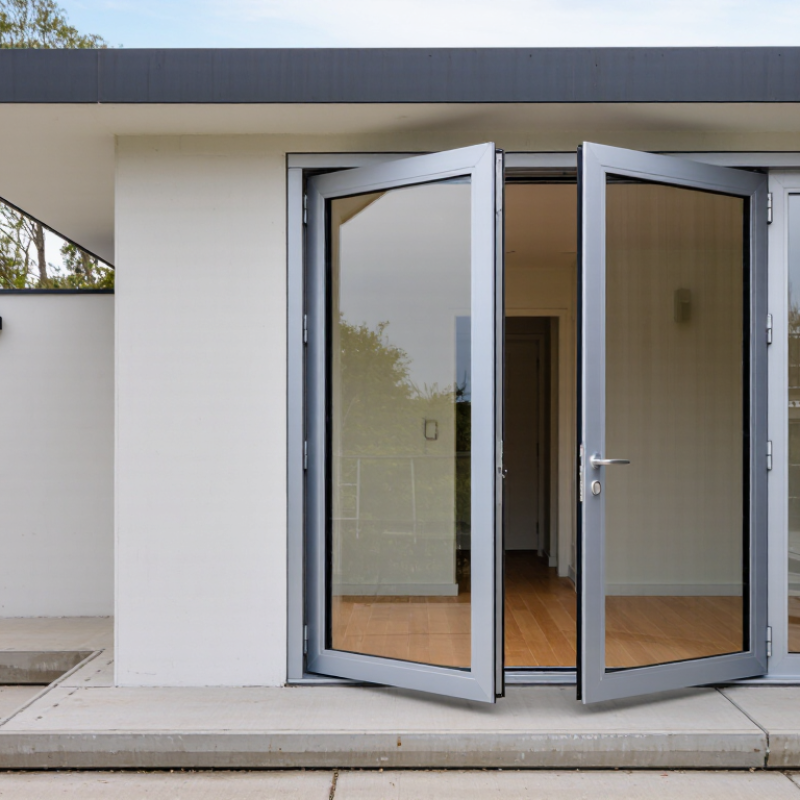
Top Aluminum Residential Door Manufacturers in China

Overview of China’s Aluminum Residential Door Industry

China’s aluminum residential door industry serves a wide range of homes, from urban apartments to detached houses. Its manufacturing base combines aluminum profile extrusion, glass processing, hardware assembly, and surface finishing. Many factories can adjust frame sizes, colors, glazing, and opening styles to suit different projects.

Production details matter. Thermal-break profiles can help limit heat transfer, while weather seals and precise corner joints affect drafts and water resistance. Powder-coated finishes are common, but durability depends on preparation and coating quality. A door may look solid in a showroom and still perform poorly if its frame, hinges, or installation are not suited to the opening. Small gaps count.

The industry includes both high-volume production and made-to-order work. Capabilities vary, even among suppliers offering similar designs. Buyers can compare profile thickness, glass specifications, hardware materials, finish samples, and documented performance tests. Ask how dimensions are checked and how packaging protects glazed panels during transport. Details should be confirmed in writing.

Regional climate and building conditions also influence suitable specifications. Coastal locations may need greater attention to corrosion resistance, while colder areas benefit from careful review of insulation details. Product claims are not always directly comparable. Checking test methods and project requirements is a practical step before selecting a residential aluminum door.

Top Aluminum Residential Door Manufacturers in China — Industry Overview

Material density benchmark: aluminum is substantially lighter than steel by volume, a useful material consideration in residential door design.

Typical reference densities are approximately 2,700 kg/m³ for aluminum and 7,850 kg/m³ for steel. These are material benchmarks, not finished-door weights or market-share figures; actual alloy and product values vary.

Types of Aluminum Doors Made for Residential Use

Residential aluminum doors are commonly made as hinged, sliding, folding, or pivoting systems. Each suits a different room and opening.

Hinged doors provide a familiar, secure fit for front entries and side doors, but their swing needs clear floor space. Sliding doors work well beside patios or balconies. Their panels move along a track, leaving more room for furniture, though the track needs regular cleaning.

Folding doors can open a wide connection to a garden or terrace. Check the panel stack and threshold before choosing one; a wide opening can still feel awkward if panels block the walkway.

Pivot doors create a distinctive entrance, but their weight, hardware, and clearance require careful planning.

Small details matter. Ask how the frame handles drainage, how glazing affects heat transfer, and whether the seals meet tightly at the corners. Thermal-break frames and well-fitted weather seals may improve comfort, but results depend on installation and local conditions.

A slightly uneven opening can complicate fitting, so measure the finished structure rather than relying on early drawings alone. That step is easy to overlook.

Leading Aluminum Residential Door Manufacturers in China

Leading Aluminum Residential Door Manufacturers in China

China’s leading aluminum residential door manufacturers serve projects ranging from compact city apartments to detached homes. Their work combines profile design, glazing choices, surface finishing, and hardware selection. A well-made door should feel stable when opened, close without scraping, and keep rain from entering at the sill. Small details matter.

When comparing suppliers, ask how frame dimensions are checked and how corner joints are assembled. Request specifications for aluminum wall thickness, glass configuration, locking points, and weather seals. Then compare those details with your home’s opening conditions. Coastal air, strong afternoon sun, and frequent temperature changes can affect finish and performance. Samples help, but a showroom sample cannot prove how every production batch will look. That is worth remembering. Experienced manufacturers should explain installation tolerances, packaging, inspection steps, and after-sales support clearly. Ask for test reports that match the exact door configuration, not a similar model. Communication can still be uneven; drawings may need another review before production. Careful buyers leave time for that review and confirm measurements on site.

Top Aluminum Residential Door Manufacturers in China - Leading Aluminum Residential Door Manufacturers in China

Evaluation dimension Common product options What buyers should verify
Door formats Hinged entry doors, sliding patio doors, folding doors, and French-style doors. Opening direction, clear opening size, threshold design, and suitability for the intended location.
Aluminum profile Extruded aluminum frames and sashes; profiles may be non-thermally broken or thermally broken. Alloy and temper documentation, profile drawings, wall thickness, and whether the quoted system includes a thermal break.
Thermal performance Performance depends on the complete door assembly, including frame, glazing, seals, and installation. Request tested whole-door U-factor or equivalent thermal-performance data for the specified configuration and market.
Glazing Single, double, or laminated glass; insulated glazing units can be specified where appropriate. Glass thickness and build-up, safety-glazing requirements, spacer and seal details, and applicable local codes.
Weather sealing Perimeter gaskets, weatherstripping, drainage paths, and threshold seals vary by door system. Air infiltration, water penetration, and wind-load test reports for the relevant size and configuration.
Surface finish Common options include powder coating, anodizing, and wood-grain finishes. Color reference, finish specification, exposure suitability, and any available coating or corrosion-resistance test documentation.
Hardware and operation Hinges, locks, handles, rollers, and multipoint locking options depend on door type and system design. Hardware material, load rating, corrosion resistance, security features, and replacement availability.
Customization and production Made-to-measure sizes, glazing choices, colors, opening configurations, and accessory options may be offered. Approved shop drawings, production tolerances, sample approval, packaging details, and stated lead time.
Standards and testing GB/T 8478-2020 is a Chinese national standard covering aluminum alloy doors and windows. Confirm the standard and test methods applicable to the product, project, and destination market; request current supporting documents.
Installation and after-sales Installation requirements, spare parts, warranty coverage, and service arrangements differ by supplier and project. Written warranty terms, installation instructions, spare-parts policy, and responsibility for site measurement and fitting.

Product options and performance vary by system and specification. Verify project-specific details through drawings, samples, and applicable test documentation.

Manufacturing Standards and Quality Features

Top Aluminum Residential Door Manufacturers in China

Manufacturing standards matter most when they produce measurable results on the finished door. A capable manufacturer should control alloy selection, profile dimensions, welding, surface treatment, and final assembly. Ask for the specified aluminum alloy and temper, plus inspection records for critical dimensions. Small deviations can make a frame difficult to install. They can also affect how the panels seal.

Look closely at coating thickness, corner joints, drainage paths, and hardware alignment. A sample should show an even finish, clean edges, and hinges that move without scraping. For insulated doors, thermal breaks and suitable glazing can reduce heat transfer, though performance depends on the full assembly. Air leakage, water resistance, and wind-load testing should match the project’s requirements and local conditions. Test reports are useful; vague claims are not. Ask which test method and configuration were used.

Quality checks should continue beyond the showroom sample. Manufacturers can inspect incoming materials, monitor production, and verify finished products before packing. Request clear records and confirm that the tested design matches the order. Packaging deserves attention too. A scratched frame is still a defect. No process is perfect, and I would not rely on a certificate alone. Compare documented results with the door’s actual construction, including seals, fasteners, and installation details.

How to Evaluate Chinese Aluminum Door Manufacturers

A supplier’s catalog is only a starting point. Ask which aluminum alloy and wall thickness are used in the frame and sash. Compare those details with approved drawings. Request coating specifications, corner-joint details, and hardware schedules, not just glossy photos. Small details matter. A thermal break should be continuous, while drainage paths should be visible in section drawings. For coastal or humid sites, ask how the finish and fasteners resist corrosion.

Check evidence, not promises. Review recent reports for air leakage, water penetration, and wind resistance. Confirm the tested configuration matches your opening sizes. Visit a production line if possible; inspect cut edges, sealant placement, and how finished units are protected for shipping. A sample corner can reveal more than a brochure. Ask about lead times, replacement parts, and who handles installation questions after delivery. One visit is not enough. Schedules can be staged, and one sample may hide variation. Ask for quality records from multiple production batches before making a decision.

FAQS

What material details should buyers request?

Ask for the aluminum alloy, temper, and frame-wall thickness. Compare them with approved drawings.

Which construction details deserve close inspection?

Check corner joints, coating thickness, drainage paths, and hardware alignment. Small details matter.

How can buyers judge insulation performance?

Look for continuous thermal breaks and suitable glazing. Results depend on the complete door assembly.

What test reports should a supplier provide?

Request recent air-leakage, water-resistance, and wind-load reports. Confirm the tested design matches your opening sizes.

Can a showroom sample prove consistent quality?

No. Ask for records from several production batches; one polished sample may hide variation.

What should buyers inspect during a factory visit?

Check cut edges, sealant placement, and shipping protection. A sample corner can reveal useful details.

How should coating and hardware suit the project site?

For coastal or humid locations, ask how finishes and fasteners resist corrosion. I might still miss a small weakness.

Is a certificate enough to confirm quality?

Not enough alone. Compare test records with seals, fasteners, installation details, and the actual ordered design.

Conclusion

China’s aluminum residential door industry has developed around growing demand for durable, low-maintenance, and adaptable home solutions. Manufacturers produce a range of options, including entry doors, patio and balcony doors, sliding doors, and doors with thermal or sound-insulating features. Designs vary in frame profiles, glazing, finishes, and opening styles, allowing homeowners and builders to match doors to different climates, layouts, and architectural preferences.

When comparing leading manufacturers, buyers should look beyond appearance and price. Important considerations include material consistency, fabrication accuracy, weather resistance, hardware performance, sealing, and documented quality-control processes. Clear product specifications and appropriate testing can help assess whether an Aluminum Residential Door is suited to its intended use. Buyers should also review production capacity, customization options, lead times, packaging, communication, and after-sales support. A careful evaluation of samples and technical documentation can make it easier to identify a reliable supplier and achieve a balance of performance, appearance, and long-term value.


Evelyn

Evelyn

Evelyn is a dedicated marketing professional with a strong understanding of our company’s products, services, and the needs of the customers we serve. With a background in market research, content strategy, and professional communication, Evelyn translates complex product information into clear,......