Featured Luxury Villa Entry Door Systems
Factory-direct high-performance entrance systems engineered for global weather conditions, structural compliance, and anti-burglary defense.
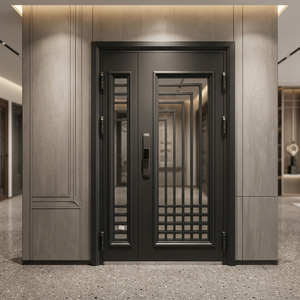
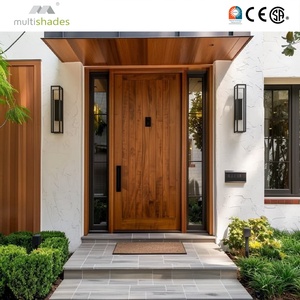
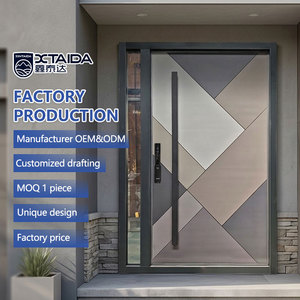
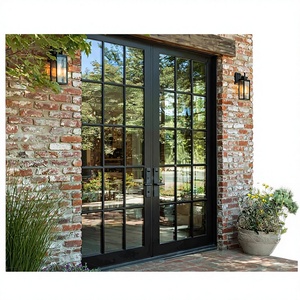
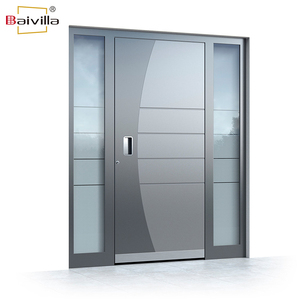
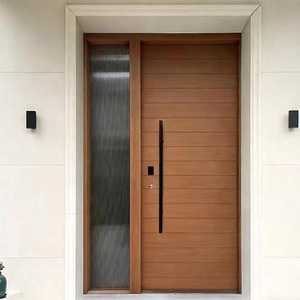

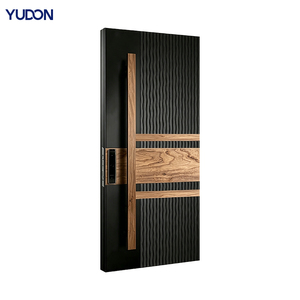
Architectural Sourcing Analysis: Sourcing Villa Entry Doors from China
The global luxury residential real estate market demands entrance doors that transcend mere aesthetic grandiosity. Today's architectural frameworks require exterior entrance portals to serve as high-security barriers, thermal isolation envelopes, and smart IoT access hubs. As international developers, architects, and B2B buyers navigate the procurement landscape, China—specifically the specialized industrial cluster in Foshan, Guangdong—has emerged as the premier manufacturing ecosystem for custom villa entry doors.
Historically, high-end villa front doors were dominated by traditional solid timber or heavy rolled steel. However, material evolution and manufacturing technology have altered buyer expectations. Modern architectural specifications prioritize Thermal Break Aluminum Alloys (6063-T5/T6), Fluorocarbon/PVDF surface treatments, 5D volumetric printed aluminum door panels, and integrated biometrics. These systems provide superior durability against coastal salt spray, thermal expansion, and forced entry attempts without requiring constant maintenance.
This industry report outlines the critical engineering criteria, material science metrics, security standardization, and global purchasing dynamics required when selecting a top-tier China villa entry door supplier and exporter.
Engineering Pillars of Luxury Villa Entrance Systems
Burglar Defense & Armor Structural Integrity
Utilizing multi-point locking gear assemblies, manganese anti-drill lock protection plates, and anti-pry dog bolts embedded into heavy-duty 2.0mm–3.0mm wall thickness aluminum profile frames, meeting European RC3 and RC4 security certifications.
Thermal Isolation & Energy Efficiency
Engineered with PA66GF25 polyamide thermal break strips, high-density polyurethane insulated cores, and continuous EPDM triple-gasket perimeter seals to achieve U-values lower than 1.1 W/m²K for Passive House projects.
Smart IoT & Biometric Access Control
Direct factory integration of 3D structured-light facial recognition, Tuya WiFi/Zigbee app sync, live video intercoms, encrypted RFID cards, and concealed electronic magnetic multi-bolt locking systems.
Manufacturing Infrastructure: Vancoor Entrance System Co., Ltd.
Rooted in Foshan, China—the world’s recognized aluminum extrusion and architectural hardware center—Vancoor Entrance System Co., Ltd. has established a legacy of technical excellence since 1993. Spanning a 50,000 m² state-of-the-art production base and supported by over 230 dedicated technicians, Vancoor bridges bespoke architectural design with industrial manufacturing scale.
- Over 30 patented door & window structural technologies
- 500,000 units annual factory production capacity
- Multi-stage quality control & 100% pre-shipment trial assembly
- Drawing-based CAD & 3D BIM structural engineering support
- Global regulatory compliance (USA, EU, Australia, Middle East)
- Standardized 4–5 week lead time with marine protection packaging
Material Anatomy of Premium Villa Entry Doors
To deliver long-term value, luxury villa entry doors must combat weather degradation, structural deflection, and mechanical wear. Standard residential doors often suffer from sashing sagging, surface oxidation, and thermal bridging. China's leading exporters eliminate these failure points through advanced composite construction.
1. Extruded Aluminum Alloys (6063-T5 vs. 6060-T6)
High-end exterior entrance doors rely on heavy-duty architectural aluminum profiles. Using 6063-T5 aluminum provides optimal tensile strength and elastic recovery, while critical structural members (such as load-bearing pivot pins and hinge reinforcement channels) utilize 6060-T6 heat-treated alloys. Profile wall thicknesses for villa main entrance doors typically range from 2.0mm to 3.0mm, preventing frame distortion under high wind pressure or heavy door leaf loads exceeding 350kg.
2. Thermal Break Insulating Strips (PA66GF25)
Uninsulated metal doors create severe thermal bridges, resulting in interior condensation, heat loss in winter, and rapid cooling loss in summer. Top Chinese suppliers incorporate glass-fiber reinforced polyamide thermal break strips (PA66GF25). Placed between the interior and exterior aluminum skins, these 24mm to 34mm thermal barriers drastically decrease overall heat transfer coefficients (U-factors).
3. Cast Aluminum & 5D Surface Treatment Tech
Exterior panels often feature solid cast aluminum plates (8mm to 12mm thickness) or 5D volumetric printed aluminum skins. Unlike traditional wood veneers that crack under direct sun exposure, high-grade fluorocarbon PVDF powder coatings deliver UV resistance and salt spray protection exceeding 3,000 hours under ASTM B117 testing standards. This renders the doors virtually immune to rust, fading, and coastal air corrosion.
4. Security Glazing Integration
When villa entry doors incorporate sidelights or transoms, glass integrity is paramount. Standard specifications require double or triple-glazed tempered glass units with Low-E coatings and argon gas filling. Coastal or high-security regions require laminated impact glass featuring PVB or SGP (SentryGlas®) interlayers to resist hurricane-force winds and brute-force impact attempts.
Villa Entry Door Material Matrix
Comparing key technical metrics across common B2B entry door structural materials.
| Material System | Thermal U-Value (W/m²K) | Burglar Resistance | Weatherability & UV | Soundproofing (STC) | Lifespan |
|---|---|---|---|---|---|
| Thermal Break Aluminum Clad | 0.9 – 1.4 | RC3 / RC4 (High) | Excellent (PVDF Coating) | 38 – 44 dB | 40+ Years |
| Cast Aluminum Solid Panel | 1.2 – 1.6 | RC4 (Ultra High) | Superior (No Rust) | 36 – 42 dB | 50+ Years |
| Steel Armored Core + Wood Panel | 1.5 – 2.0 | RC3 (High) | Moderate (Requires Maintenance) | 35 – 40 dB | 20–25 Years |
| Solid Hardwood Exterior | 1.8 – 2.4 | RC1 / RC2 (Moderate) | Poor (Susceptible to warping) | 30 – 34 dB | 15–20 Years |
Future Procurement Trends for Villa Entry Doors (2025–2030)
As international architectural preferences pivot toward clean minimalist lines, smart home connectivity, and sustainable building envelopes, B2B importers must align their supply chains with emerging trends. Manufacturers in China are leading several core technological shifts:
1. Ultra-Large Oversized Pivot Doors
Architects are increasingly specifying massive single-leaf entrance doors up to 4.5 meters in height and 2.2 meters in width. These systems rely on heavy-duty floor-concealed hydraulic pivot hinges capable of supporting up to 500kg, offering soft-closing, 90-degree hold-open functions, and zero threshold drag.
2. Biometric & Smart Cloud Security Integration
Mechanical keys are giving way to 3D structured light facial recognition modules, palm vein scanners, and invisible smart locks built directly inside the aluminum profile sash. App-controlled cloud access via Tuya, Matter, or Zigbee protocols allows real-time video surveillance and remote unlocking.
3. Passive House Thermal Performance
Global carbon reduction codes (such as EU NZEB standards and US Title 24) are pushing door U-values below 0.8 W/m²K. Next-generation villa entry doors combine Aerogel insulation blankets within profile chambers and triple-pane Low-E warm-edge spacers.
Frequently Asked Questions (FAQ)
Addressing crucial technical, logistical, and customization questions for B2B procurement.
Transform Your Luxury Projects with China's Premier Villa Door Manufacturer
Whether you are sourcing custom thermal break entry doors for a private luxury estate or specifying high-volume architectural packages for residential developments, our engineering team is ready to deliver tailored shop drawings, technical pricing, and global logistics support.
