1. Architectural Security & Semantic Sourcing Overview
An Industry-First Analysis of Next-Generation Aluminum Entrance Door Systems for Global B2B Procurement
In modern architectural fenestration, the exterior entry door is no longer merely a aesthetic threshold; it represents the primary structural shield and thermal boundary of residential and commercial infrastructures. As architectural paradigms shift toward expansive glass facades, minimalist sightlines, and smart-building integration, procurement managers, architectural developers, and commercial importers face a complex matrix of engineering trade-offs. Balancing high-burglar security (RC2 to RC4 standards), extreme thermal efficiency (U-values < 1.0 W/m²K), and long-term durability in severe coastal environments requires specialized OEM manufacturing capability.
This technical whitepaper provides high-gain domain insights into the structural metallurgy, thermal-break mechanics, multi-point lock engineering, and supply-chain logistics that define premier aluminum entrance door manufacturing. Authored by industry engineering specialists, this document establishes clear benchmarks for evaluating custom OEM factories and suppliers worldwide.
2. Featured OEM High-Security Entrance Systems
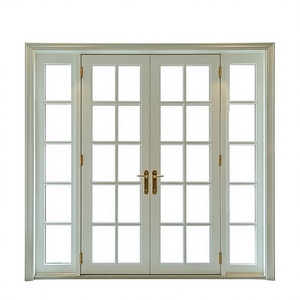
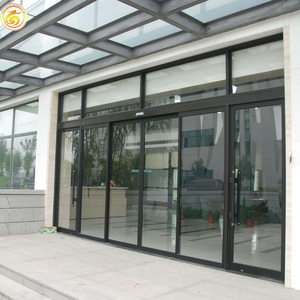
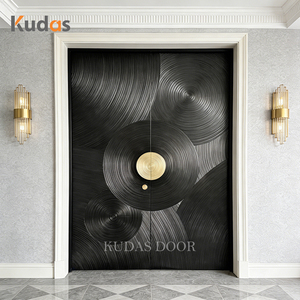
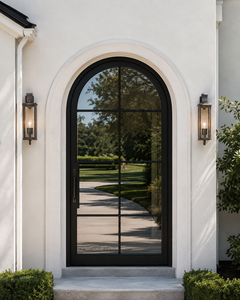
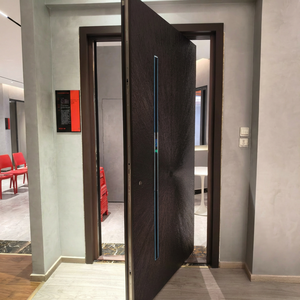
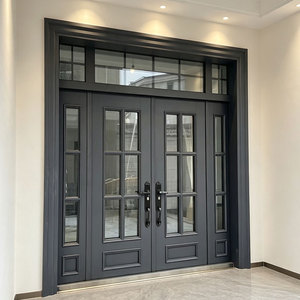
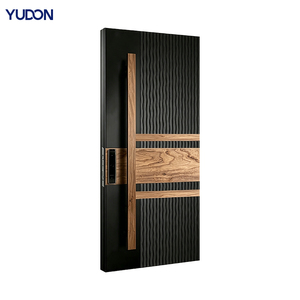
Factory-Direct Product Portfolio Engineered for Luxury Villas, Commercial Storefronts, and High-Security Residences

3. Structural Metallurgy & Security Physics in OEM Manufacturing
Dissecting Profile Extrusions, Thermal Break Polymerics, and Anti-Burglary Hardware Standards
When evaluating high-security aluminum entrance door factories, generic claims of "heavy-duty construction" are insufficient for rigorous technical submittals. Precision engineering requires strict adherence to international metallurgical standards and mechanical testing protocols.
3.1 Extrusion Metallurgy: 6063-T5 vs 6060-T6 Architectural Alloys
The structural backbone of high-security entrance doors relies on extruded aluminum profiles. Leading factories utilize primary billet 6063-T5 or 6060-T6 aluminum alloys, avoiding recycled scrap aluminum which introduces trace impurites and structural micro-cracks under severe wind loads or forced impact.
- Wall Thickness Rigidity: Standard interior doors often employ 1.2mm to 1.4mm profiles. Premium OEM security entrance doors specify a minimum profile wall thickness of 2.0mm to 3.5mm, with reinforced structural internal ribs to prevent frame twisting when supporting heavy triple-glazed or armored panel sashes.
- Tensile Yield Strength: 6063-T5 alloy exhibits a ultimate tensile strength of ≥ 185 MPa and yield strength of ≥ 145 MPa, offering optimal elasticity to absorb high kinetic force impacts (such as hurricane wind pressures or mechanical prying tool stress).
3.2 Thermal Break Science: Polyamide PA66-GF25 Structural Cavities
To eliminate the natural conductivity of aluminum (k ≈ 200 W/m·K), high-end OEM suppliers incorporate structural thermal breaks. Superior performance is achieved using PA66-GF25 (Polyamide 66 reinforced with 25% glass fiber) insulation strips crimped between outer and inner aluminum extrusions.
Acoustic Dampening
Multi-chamber thermal cavities combined with acoustic laminates yield noise reduction ratings up to STC 45 dB.
Burglar Resistance (RC3/PAS24)
Integrated steel anti-pry plates and multi-point hook locks tested against crowded crowbar and drill attacks.
Extreme Weather Sealing
Triple EPDM continuous vulcanized gasket seals eliminate air leakage and water penetration under 600 Pa storm pressure.
3.3 Performance Benchmark Matrix
The table below details standard industry engineering metrics for luxury aluminum entrance door systems produced in top-tier OEM Chinese manufacturing hubs:
| Engineering Parameter | Standard Commercial Grade | High-Security OEM Specification | Testing / Compliance Benchmark |
|---|---|---|---|
| Profile Thickness | 1.4mm - 1.6mm | 2.0mm - 3.5mm Heavy Gauge | GB/T 8814 / EN 12020 |
| Thermal Insulation (U-Factor) | 2.2 - 2.8 W/m²K | 0.9 - 1.3 W/m²K (Passivhaus Ready) | ISO 10077-2 / NFRC 100 |
| Forced Entry Security Rating | Standard Latch (RC1) | European Class RC2 / RC3 / PAS 24 | EN 1627-1630 / BS PAS 24 |
| Wind Pressure Resistance | Class 3 (1500 Pa) | Class 5+ (3000 Pa / Hurricane Zone) | ASTM E330 / EN 12210 |
| Surface Finish Durability | Standard Powder Coating | PVDF Fluorocarbon / Qualicoat Class 3 | AAMA 2605 / 1000+ Hr Salt Spray |
4. Manufacturer Competence & OEM Supply Chain Capability
Inside Vancoor Entrance System Co., Ltd. — 30+ Years of Manufacturing Mastery in Foshan, China
Sourcing high-security custom aluminum entrance doors requires partnering with an established manufacturer capable of maintaining tight machining tolerances across high volume. Located in Foshan, Guangdong—the premier extrusion and fenestration capital of Asia—Vancoor Entrance System Co., Ltd. has led the industry since 1993.
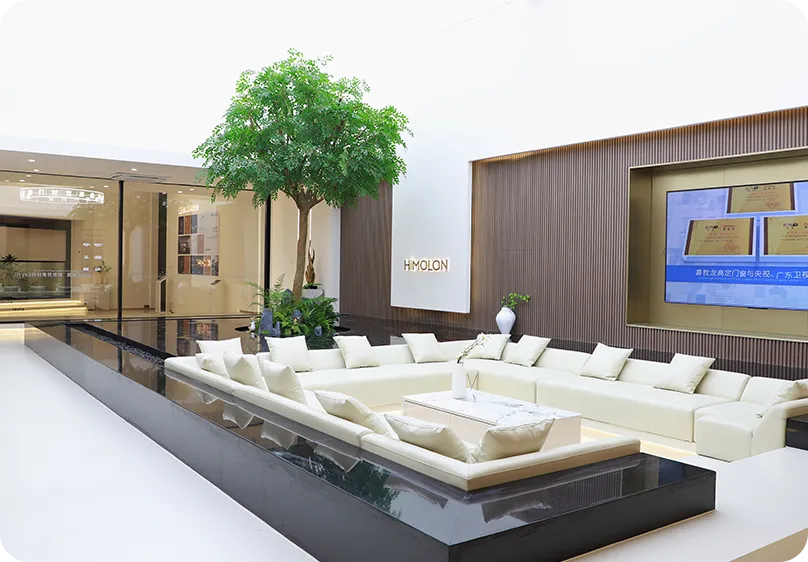

Operating out of a modern 50,000 m² digital manufacturing facility supported by over 230 certified technicians and engineers, Vancoor integrates the complete production lifecycle in-house:
- Precision CNC Machining: German 5-axis CNC profile machining centers ensure lock prep cutouts, corner key miters, and hinge pocket milling are performed within ±0.1mm tolerance, ensuring airtight sash-to-frame seals.
- 30+ Proprietary Patents: Innovation is backed by 30+ national utility and design patents, including silent-closing multi-point locks, thermal break corner locking keys, and storm-proof threshold drainage tracks.
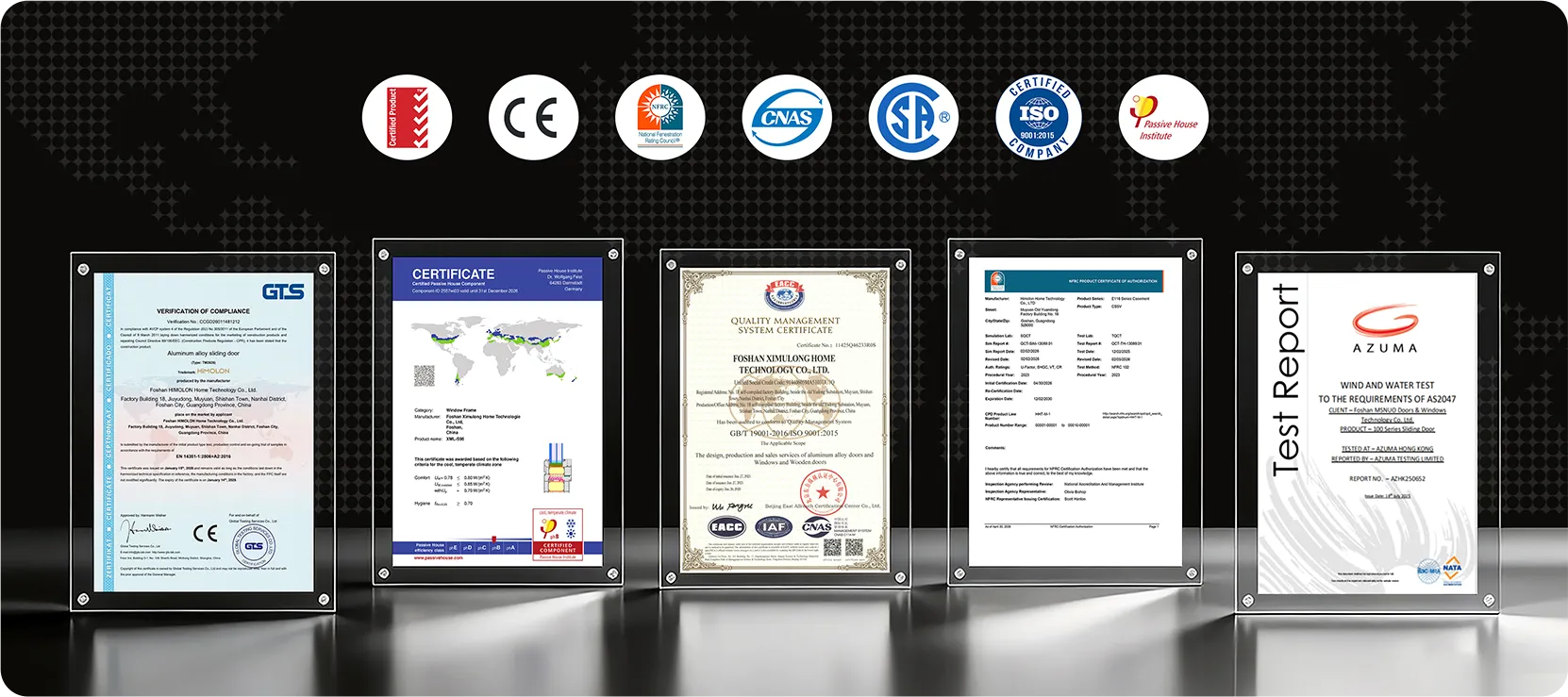
- Strict Global Compliance: Product lines are tested and certified for North America (NFRC/ASTM), Europe (CE/EN standards), and Australia/New Zealand (AS2047/AS1288), backed by complete physical test report documentation.
- Drawing-Based Customization: Every order receives full CAD and 3D shop drawings from English-fluent project engineers within 24 hours of inquiry, eliminating communication gaps for architectural developers.
5. Future Sourcing & Technological Trends (2026–2030)
Anticipating Market Shifts in Architectural Access Control, Cast Aluminum Artistry, and Green Building Compliance
As global building codes tighten around embodied carbon and energy performance, and as consumer demand shifts toward seamless home automation, B2B buyers must align with forward-looking suppliers. The key procurement trends shaping the next decade include:
5.1 Seamless Smart Access & Cloud Ecosystems
Traditional mechanical keys are rapidly giving way to motorized biometric locking systems. Modern OEM factories now integrate 3D structured-light face recognition, semiconductor fingerprint sensors, and Tuya/Zigbee smart cloud modules directly into the aluminum door panel structure. Concealed motorized multipoint locks automatically extend heavy steel bolts upon door closure and unlock via smartphone apps, video intercoms, or biometric scans.
5.2 Grand Format Cast Aluminum & Architectural Pivot Systems
Minimalist luxury villa designs increasingly demand oversized single-panel pivot entrance doors measuring up to 2.5 meters wide and 4 meters tall. Manufacturing these massive sashes without warping requires specialized heavy-cast aluminum panels (up to 8mm solid cast face plates) coupled with heavy-duty concealed hydraulic pivot hinges supporting sash weights up to 600 kg with effortless 1-finger operation.
5.3 Sustainable Powder Coatings & Coastal Corrosion Immunity
With high-end real estate expanding in coastal and tropical regions, surface treatment durability is paramount. Modern suppliers rely on Qualicoat Class 2 & 3 super-durable powder coatings and PVDF fluorocarbon spraying that resist intense UV radiation, salt fog corrosion (tested beyond 1000+ hours under ASTM B117), and atmospheric pollutants for over 25 years without chalking or color fading.


6. Frequently Asked Questions (FAQ) for B2B Procurement
Addressing Common Logistics, Code Compliance, Customization, and Quality Assurance Enquiries
What is the typical production lead time for custom OEM aluminum entrance doors?
Following CAD drawing approval and deposit confirmation, typical factory manufacturing time ranges between 4 to 5 weeks (28-35 calendar days). Complex projects requiring custom cast aluminum molds, specialized glass coatings, or custom RAL powder colors may take up to 6 weeks. Ocean freight duration varies by destination port (e.g., West Coast USA: 14-18 days; Europe: 28-35 days).
Can you manufacture aluminum doors to specific local building codes and hurricane standards?
Yes. Our engineering team configures profile wall thickness, glass specs (e.g., SentryGlas® PVB impact laminates), and sealing gaskets to comply with specific regional standards—including Florida Product Approval (TAS 201/202/203 for hurricane impact), Australian AS2047/AS1288 standards, and European CE / EN 14351-1 norms. Test reports and engineering calculation sheets are supplied per project requirement.
What is the workflow for submitting custom architectural CAD drawings?
Buyers can submit project drawings in PDF, DWG, DXF, or BIM format. Our dedicated English-speaking engineering office reviews the architectural plans, structural opening sizes, and required hardware specifications, returning comprehensive shop drawings, 3D section renders, and a line-item quotation within 24 hours.
How are high-security aluminum doors packaged to prevent damage during container shipping?
Export packaging uses a rigorous multi-tier protection protocol: 1) Protective anti-scratch film on all aluminum frame surfaces; 2) High-density foam corner guards; 3) Bubble wrap cushioning; 4) Fully enclosed ISPM-15 compliant fumigated plywood crates or steel frame pallets with internal strapping to prevent movement inside ocean containers.
What remote technical support and installation guidance do you offer overseas contractors?
We provide full installation documentation, exploded technical detail drawings, and step-by-step HD video installation guides for every door system. Additionally, our project engineers conduct real-time video technical support across time zones to assist jobsite installers with hardware calibration, smart lock pairing, and perimeter sealing.
Partner with China's Premier High-Security Entrance Door OEM Factory
Request a comprehensive product catalog, customized CAD shop drawings, or factory-direct pricing for your upcoming commercial or luxury residential development.
