Technical Information Gain: Beyond Standard Fenestration
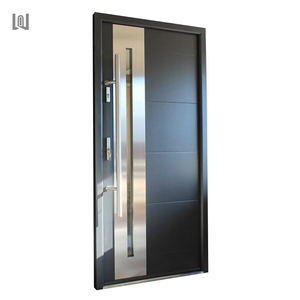
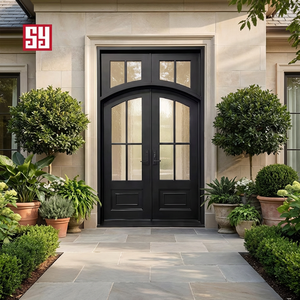
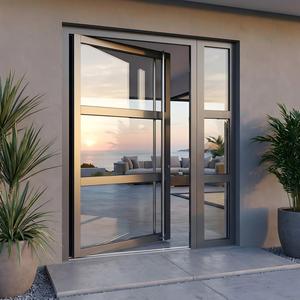
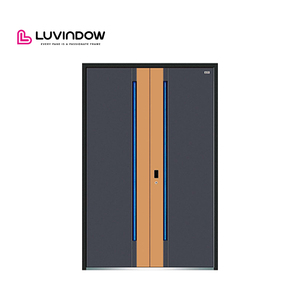
Modern high-security entrance doors operate as multi-functional environmental and defense barriers. Unlike traditional single-layer hollow metal doors, OEM high-security entry doors integrate structural aluminum metallurgy, multi-point electro-mechanical locking, acoustic dampening cores, and thermal breaks into a unified architectural system.
1. Structural Alloy Metallurgy & Core Matrix Engineering
The structural integrity of a security entry door depends primarily on its alloy formulation and profile cross-section design. At Vancoor, our entry doors utilize high-tensile T6063-T6 architectural extruded aluminum profiles boasting an ultimate tensile strength exceeding 205 MPa and a yield strength of 170 MPa. To resist physical breaching via mechanical drills, hydraulic jacks, or heavy angle grinders, our door panels incorporate internal structural armor cores:
- Manganese Steel Anti-Drill Armor Plates: Positioned directly behind lock cylinders and mortise lockboxes to deflect high-speed drill bits.
- High-Density Mineral Wool & Polyurethane Core Inserts: Injected at 60 kg/m³ density to achieve superior thermal insulation while eliminating hollow panel resonance.
- Internal Torsion Ribbon Stiffeners: Continuous vertical steel ribs welded within the profile cavities to prevent leaf twisting during extreme thermal expansion or forced entry attempts.
2. European Burglar Resistance Standards (EN 1627 RC2 to RC4)
Global B2B procurement specs rely heavily on the European Norm EN 1627 standard for burglar resistance. Vancoor custom OEM entry doors are modularly engineered to meet specific Resistance Classes (RC):
| Resistance Class (RC) |
Attack Vector / Tools Used |
Resistance Time |
Target Architectural Application |
| EN 1627 RC2 |
Opportunistic attack using simple tools (screwdrivers, pliers, wedges). |
3 Minutes continuous contact |
Standard multi-family residential apartments, secondary entrances. |
| EN 1627 RC3 |
Experienced burglar using heavy tools (crowbars, claw hammers, hand drills). |
5 Minutes continuous contact |
Luxury residential villas, perimeter commercial offices, retail banks. |
| EN 1627 RC4 |
Determined attack using heavy power tools (angle grinders, cordless drills, chisels). |
10 Minutes continuous contact |
Government embassies, high-value jewelry stores, luxury estate safe rooms. |
3. Thermal Break Performance & Acoustic Decibel Reduction
In modern green building standards (such as LEED v4 and Passive House standards), security doors must prevent thermal bridging. Vancoor incorporates Polyamide PA66 GF25 (25% Glass Fiber Reinforced) thermal break strips that divide the interior and exterior aluminum profiles. This creates a thermal barrier reducing heat conduction drastically.
Combined with double or triple Low-E tempered safety glass units insulated with 90% Argon gas, our entry doors achieve low overall U-factors (U-value ≤ 1.1 W/m²K or R-value ≥ 5.2). Furthermore, quadruple EPDM perimeter compression gaskets isolate airborne sound waves, delivering certified sound transmission attenuation up to STC 45 dB.