Featured OEM Insulated Entry & Security Door Series
Factory-direct thermal break and cast aluminum door systems custom engineered for luxury villas, high-end residential complexes, and modern commercial projects.
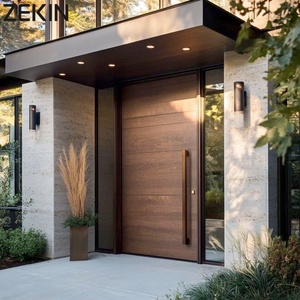
ZEKIN Modern American Design Heat Insulation Fire Prevention Luxury Entrance Pivot Door
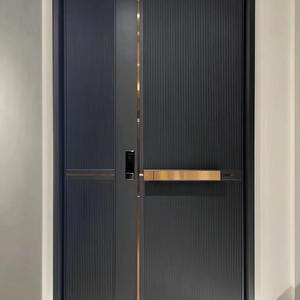
FoShan High-End Cast Aluminum Security Anti-Theft Villa Entry Door Stainless Steel Entrance Door
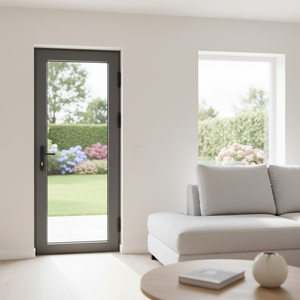
RG60C Ruiguan Modern Design Aluminum Alloy Door Thermal Insulation Side Opening Finished Surface
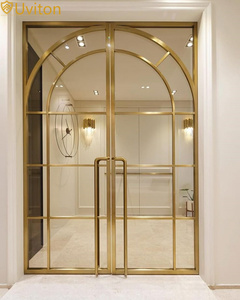
Luxury Brass Hinge Entry Door for Hotel Villa Shop Double Glass Front Door with Security Lock
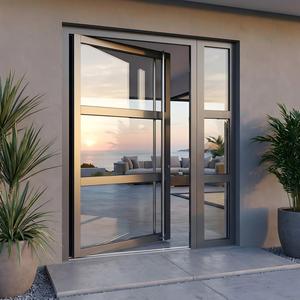
Modern Black Aluminum Pivot Door With Sidelights and Grids Design Large Glass Exterior Front Entry
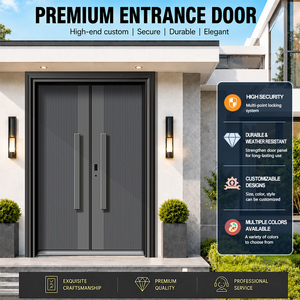
Customized Anti-Theft Villa Entrance Door Exquisitely Carved Cast Aluminum Door Modern Simple Entry Door
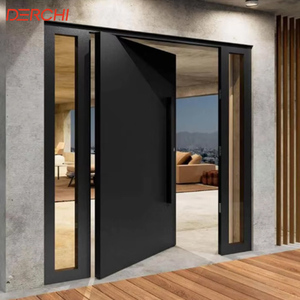
High Quality Exterior Entrance Cast Aluminium Front Main Door Modern Residential With Glass Pivot Security Entry Door
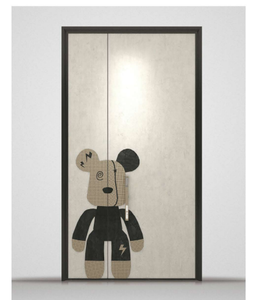
Factory Direct Premium Cartoon Aluminum Metal Security Front Entry Doors Hotel Theme Room Apartment Doors
The Engineering Architecture of High-Performance OEM Insulated Entry Doors
An authoritative whitepaper breakdown on thermal transmittance, structural integrity, and custom OEM fabrication techniques for enterprise buyers.
Thermal Break & Barrier Polyamide Technology
Standard metal entry doors are prone to severe thermal bridging, causing rapid interior heat loss in winter and condensation damage. Our OEM entry doors utilize **PA66 GF25 (25% Glass Fiber Reinforced Polyamide)** multi-chamber thermal breaks. This break separates the inner and outer aluminum skins, reducing frame thermal conductivity by up to 86% and ensuring reliable dimensional stability across temperature swings from -40°C to +80°C.
High-Density Injected Polyurethane (PUR) Cores
Inside the door leaf, high-density eco-friendly polyurethane foam (45–55 kg/m³) is injected under high pressure. This dense, hydrophobic core seals internal micro-cavities, bringing total thermal insulation value down to **U ≤ 0.9 W/m²·K (R-Value ~ 6.5)**. It also delivers sound isolation rated up to **STC 42 dB**, blocking intrusive outdoor traffic noise.
Precision Cast Aluminum & Heavy Profile Structural Engineering
For large villa entrances and high-traffic commercial buildings, structural integrity under wind loads is crucial. Our custom front entry doors combine solid cast aluminum decorative panels (ranging from 8mm to 15mm thick) with heavy-duty 6063-T6 extruded aluminum sub-frames. This design withstands wind pressure up to **5500 Pa (ASTM E330 Class E)** while giving entry doors a distinct, luxury appearance.
OEM Engineering Insight: Quad-Gasket Perimeter Sealing Architecture
Thermal performance fails if air leaks around the door frame. Vancoor’s custom OEM entry door systems feature a quad-gasket sealing system made from continuous **EPDM (Ethylene Propylene Diene Monomer)** combined with magnetic bottom drop seals. This setup maintains air infiltration below **0.06 cfm/ft² (ASTM E283)** and water resistance up to **750 Pa (ASTM E331)**, preventing drafts, moisture penetration, and thermal leakage even under severe coastal storm conditions.
Comparative Technical Performance Matrix
Objective structural and thermal metrics comparing Vancoor OEM Insulated Cast Aluminum Doors against traditional market alternatives.
| Door Core Architecture | Thermal Transmittance (U-Value) | Acoustic Rating (STC) | Structural Wind Load (ASTM E330) | Corrosion & Weather Resistance | Expected Service Life |
|---|---|---|---|---|---|
| Vancoor Thermal Break Cast Aluminum | 0.8 - 1.1 W/m²K | 38 - 44 dB | 5500 Pa (Extreme) | Fluorocarbon PVDF (30+ Yrs) | 50+ Years |
| Standard Steel Door (Unbroken) | 2.8 - 3.5 W/m²K | 26 - 30 dB | 2200 Pa (Moderate) | Prone to Edge Rust (5-8 Yrs) | 10-15 Years |
| Solid Hardwood Entry Door | 1.8 - 2.4 W/m²K | 32 - 35 dB | 1800 Pa (Low) | Requires Bi-annual Sealing | 15-20 Years |
| Standard Non-Thermal Aluminum | 3.2 - 4.0 W/m²K | 24 - 28 dB | 3000 Pa (Standard) | Anodized / Powder Coated | 20-25 Years |
Future Procurement & Development Trends for Entry Systems
Key market trends, technological advances, and procurement updates shaping modern entry door design over the next decade.
1. Smart Access Integration & Motorized Multi-Point Locking
Global buyers are moving beyond traditional mechanical keyways. Future-proof OEM procurement focuses on integrating concealed motorized multi-point locks that work with 3D facial recognition, biometric fingerprint scanners, and smart home systems (Zigbee/Matter). Hidden wire raceways inside the door profile allow clean, factory-installed power and data routing.
2. Ultra-Large Architectural Pivot Systems
Modern villa designs favor grand entrances. Demand is surging for oversized insulated pivot doors reaching heights of 3.5 to 5.0 meters and widths over 2.0 meters. These systems use heavy-duty floor pivots rated for 800+ kg, low-friction hydraulic drop checks, and internal steel anti-warping tension rods to preserve seal tightness on extra-large doors.
3. Vacuum Insulated Glass (VIG) & Hybrid Glazing Integration
Entry doors with glass sidelights or inset decorative windows are adopting **Vacuum Insulated Glass (VIG)**. By replacing traditional argon gas gaps with a 0.1mm high-vacuum space, glass U-values drop to **0.4 W/m²K**, giving large glass front entry doors the insulation performance of a solid wall.
4. Sustainable Sourcing & Low-Carbon Aluminum Billets
Driven by European CBAM (Carbon Border Adjustment Mechanism) regulations, commercial project buyers now require low-carbon aluminum extruded using renewable hydropower. Using non-toxic powder coatings with zero VOC emissions helps projects meet **LEED v4** and **BREEAM** green building certification standards.
Why Choose Vancoor for Custom OEM/ODM Manufacturing
Over 30 years of aluminum innovation in Foshan, China. We help global importers, architects, and developers take custom door designs from initial drawings to final production.
50,000 m² Integrated Production Facility
Located in Foshan, China’s primary aluminum industrial hub, our manufacturing base handles aluminum extrusion, CNC precision machining, cast aluminum modeling, thermal-break strip insertion, automated spraying, and pre-export assembly testing all in-house.
Custom CAD/BIM Shop Drawings Within 24 Hours
Our engineering team works directly from architectural plans, CAD files, or PDF specs. We provide detailed 2D section drawings, 3D BIM models, and structural calculation reports within 24 hours, helping buyers simplify project submittals and approvals.
Strict Quality Testing & Global Compliance
Every door undergoes rigorous testing before shipment, including air/water pressure tests, cycle testing up to 200,000 openings, and multi-point dimensional inspections. Our products meet market codes across the **USA (NFRC/ASTM)**, **Europe (CE/EN 14351-1)**, and **Australia (AS2047)**.
Frequently Asked Procurement & Technical Questions
Clear answers to standard technical, lead-time, structural, and OEM customization questions from international B2B buyers.
Ready to Upgrade Your Projects with Custom OEM Entry Doors?
Contact our engineering team to request technical specs, CAD shop drawings, factory pricing, or full product catalogs for your upcoming projects.
