Featured Custom Aluminum Door Series
Engineered for High Structural Performance, Thermal Efficiency, and Modern Architectural Aesthetics
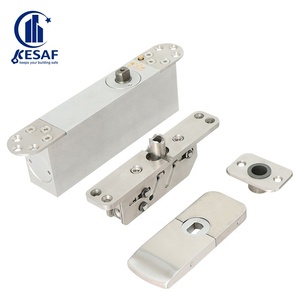
Stainless Steel 304 Top & Bottom Pivot Door Hinge Hydraulics-Self Closing 360° Rotatable Hinge
- 300Kg Heavy-Duty Door Capacity
- Self-Closing Hydraulic Mechanism
- 304 Stainless Steel Anti-Corrosion
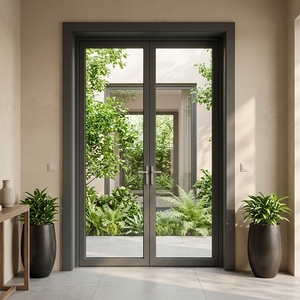
High Security Thermal Break Aluminum Double Door with Insulated Glass for Luxury Villa Entrance
- PA66 Thermal Barrier Strip
- Double Tempered Argon-Filled Glass
- Multi-Point Security Locking
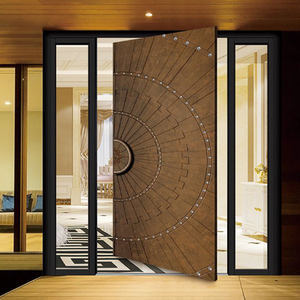
Customizable Aluminum Double Pivot Door with Smart Lock for Outdoor Entry Villa Exterior
- Biometric Smart Lock Integration
- Concealed Heavy Pivot Bearings
- Weatherproof EPDM Sealing
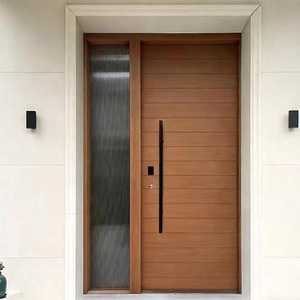
American & Australian Style Main Entrance Aluminum Alloy Safety Door Customized
- AS2047 & NFRC Code Compliant
- Impact-Resistant Reinforced Frame
- Custom Anodized / Powder Coated Finish
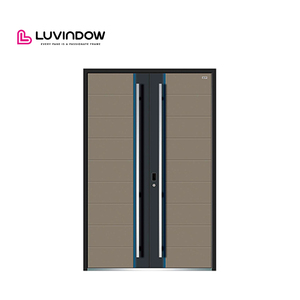
China Top Manufacturer Security Doors Custom Fireproof Aluminum Entrance Doors for Commercial Buildings
- Fire-Rated Insulation Core
- Commercial Heavy-Duty Panic Hardware
- High Traffic Abrasion Resistance
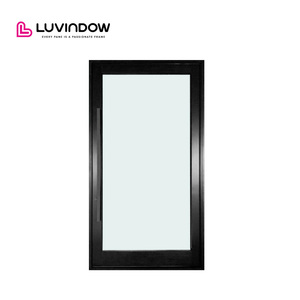
High Performance Thermal Insulation Wide Access Aluminum Pivot Entry Doors for Luxury Builders
- Ultra-Low U-Factor Thermal Break
- Panoramic Oversized Glass Panel
- Flush Threshold Accessibility
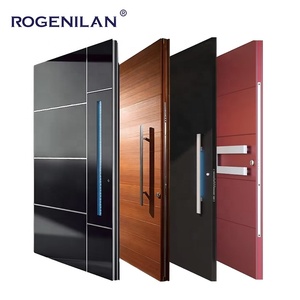
High Quality House Cast Aluminium Front Entry Swing Door Modern Residential Security Doors
- Solid Cast Aluminum Panel Construction
- Exquisite Carved Design Patterns
- Anti-Pry Reinforced Hinges & Frames
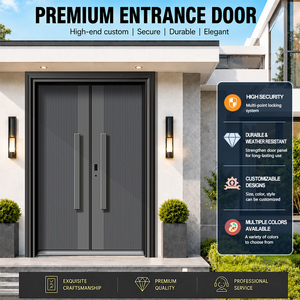
Customized Anti-Theft Villa Entrance Door Exquisitely Carved Cast Aluminum Door for Modern Residences
- Explosion-Proof Armor Structure
- Fluorocarbon UV-Resistant Surface
- Superior Acoustic Sound Proofing
Enterprise Manufacturing Advantages & Foshan Engineering Credentials
Founded in 1993, Vancoor Entrance System Co., Ltd. has evolved into a premier OEM/ODM custom aluminum door supplier and exporter in Foshan, Guangdong Province—the world's most renowned industrial cluster for premium aluminum extrusions and fenestration technology. Operating from a state-of-the-art 50,000 m² manufacturing campus staffed by over 230 skilled technicians and fenestration engineers, Vancoor bridges the gap between complex architectural concepts and physical, high-performance building envelope realities.
As a fully integrated direct manufacturer, Vancoor maintains 100% in-house quality control across every production phase: from precision CAD profile drafting, 6063-T6 aluminum alloy billet extrusion, and PA66 polyamide thermal strip insertion, to multi-axis CNC machining, Qualicoat Class 2 surface finishing, double/triple insulated glass assembly, and pre-shipment structural mock-up testing.
30+ Patented Technologies
Proprietary acoustic chamber seals, concealed multi-point locking gear, high-load hydraulic pivot mechanisms, and ultra-thermal break profile structures engineered to eliminate thermal bridging.
500,000 Units Annual Output
Equipped with automated Italian CNC milling lines, high-precision corner crimping systems, and automated glass bonding equipment to deliver large-scale commercial and multi-residential projects on schedule.
Global Code Compliance
Complete structural and thermal test documentation tailored for destination markets, including AS2047 (Australia), NFRC / ASTM hurricane-impact standards (USA/Canada), and CE EN14351-1 norms (Europe).
Industry White Paper: Material Science, Thermal Performance & Structural Integrity in Custom Aluminum Doors
When sourcing aluminum doors from China, global importers, architects, and general contractors must look beyond surface aesthetic finishes to evaluate the underlying physical metallurgy, thermal isolation physics, weatherproofing gaskets, and hardware load dynamics. High-end custom aluminum doors represent complex engineered assemblies designed to withstand environmental stress, wind loads, thermal expansion, and forced entry attempts over decades of operational life.
1. Metallurgy and Extrusion Profile Specs: 6063-T5 vs. 6063-T6 Alloys
The foundational structural integrity of any architectural door relies on the aluminum billet alloy and heat-treatment temper. Premium Chinese manufacturers like Vancoor utilize 6063-T6 architectural grade aluminum extrusions. Compared to standard 6063-T5, the T6 heat treatment process involves artificial aging to reach a ultimate tensile strength exceeding 205 MPa and a yield strength of over 170 MPa, providing superior rigidity for large-format glass panels, heavy cast aluminum villa doors, and wide-span pivot systems without frame flexure or sagging.
| Parameter / Specification | Standard Commercial Grade (6063-T5) | Architectural Heavy-Duty Grade (6063-T6) | Vancoor Custom Engineering Standard |
|---|---|---|---|
| Tensile Strength (Ultimate) | ≥ 150 MPa | ≥ 205 MPa | 215–230 MPa (Reinforced Profile) |
| Yield Strength (0.2% Offset) | ≥ 110 MPa | ≥ 170 MPa | 185 MPa |
| Wall Thickness (Primary Profiles) | 1.2 mm – 1.4 mm | 1.8 mm – 2.0 mm | 2.0 mm – 3.0 mm (Structural Door Sash) |
| Thermal Break Material | Recycled PVC / Standard Strip | Polyamide PA66 GF25 | Technoform PA66 GF25 (24mm–34mm) |
| Surface Coating Spec | Standard Anodizing (10µm) | Qualicoat Class 1 Powder | Qualicoat Class 2 / PVDF 3-Coat (25µm+) |
2. Thermal Barrier Technology: Eliminating Thermal Bridging
Aluminum features high natural thermal conductivity ($k \approx 200 \text{ W/m}\cdot\text{K}$). Uninsulated aluminum frames act as thermal bridges, permitting rapid heat transfer, internal surface condensation, and elevated HVAC energy consumption. To solve this, modern thermal break aluminum doors insert a low-conductivity thermal barrier between the inner and outer aluminum profile extrusions.
Vancoor incorporates precision-engineered PA66 GF25 polyamide insulation strips (reinforced with 25% glass fiber for matching coefficient of thermal expansion with aluminum). These polyamide strips reduce the overall door assembly $U$-factor from an uninsulated $5.8 \text{ W/m}^2\text{K}$ down to under $1.4 \text{ W/m}^2\text{K}$ when combined with double or triple Low-E insulated glass units (IGUs) filled with 90% Argon gas.
3. Surface Finishing Technologies: Corrosion Protection in Coastal & Urban Climates
Custom aluminum doors exported globally face harsh microclimates—ranging from high UV radiation in Australia and the Middle East to corrosive salt-spray marine environments in coastal North America and Europe. High-end Chinese manufacturers execute three specialized surface treatment processes:
- Architectural Powder Coating (Qualicoat Class 2): Uses super-durable polyester resins engineered to resist chalking and color fading under intense solar UV rays, passing 5-year Florida weathering tests.
- PVDF Fluorocarbon Coating (Kynar 500): A multi-coat liquid system containing 70% fluorocarbon resin. Provides chemical resistance against acid rain and extreme temperatures, meeting AAMA 2605 requirements.
- Anodizing & Electro-Dipping (Class 15/25): Builds an integral aluminum oxide layer (15 to 25 microns thick) directly on the extrusion surface, producing metallic lusters (bronze, champagne, black) impervious to scratching and oxidation.
Strategic Procurement Trends in Modern Custom Aluminum Door Systems
The international fenestration industry is undergoing rapid technical evolution. Global B2B buyers—including residential developers, project sourcing directors, and architectural hardware importers—must align their supply chain criteria with emerging technological and regulatory trends shaping the market:
1. Ultra-Narrow Sightlines & Flush Thresholds
Minimalist architectural styles demand structural glass doors with ultra-slim interlocking stiles (down to 20mm sightlines) and floor-flush sub-drainage thresholds for seamless indoor-to-outdoor spatial transitions.
2. Smart Biometric & IoT Access Integration
High-end villa entrance doors and heavy pivot doors now natively integrate biometric fingerprint sensors, facial recognition panels, 3D motorized multi-point lock actuators, and smart home automation control interfaces.
3. Passive House Thermal Standards
With global green building codes tightening (e.g., Title 24 in California, EU Energy Performance of Buildings Directive), demand is surging for warm-edge spacer glass bars, triple-pane Low-E coatings, and quad-sealed EPDM gasket systems.
4. Low-Carbon Recycled Aluminum Sourcing
Importers are demanding environmental product declarations (EPDs). Leading Foshan factories are adopting hydroelectric-smelted primary aluminum billets and post-industrial recycled alloys to lower embodied carbon footprint.
Frequently Asked Questions for B2B Importers & Contractors
Partner with China’s Leading Custom Aluminum Door Manufacturer
Need factory-direct pricing, customized CAD shop drawings, or technical advice for your residential villa, luxury housing project, or commercial build?
Get a Quote