Precision-Engineered Modern Glass Entry Door Systems
Explore our export-ready fenestration solutions. Engineered with heavy-duty thermal break profiles, advanced multi-point locking mechanisms, and high-performance Low-E architectural glass.
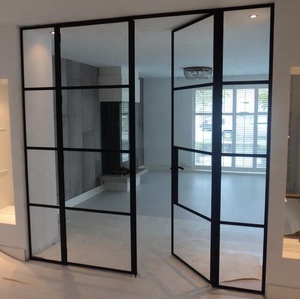
HOTIAN French Black Balcony Patio Door Wrought Iron Swing Crittall Door
Slim-profile steel and aluminum hybrid construction featuring industrial Crittall aesthetic, thermal barrier insulation, and double-tempered acoustic glass.
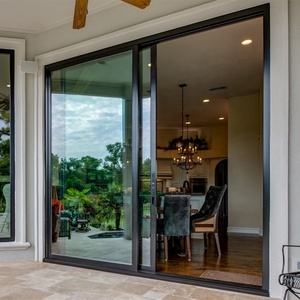
American Standard ROTO Hardware Double Glazed Lift & Slide Door
Heavy-duty villa entrance system equipped with authentic German ROTO hardware, offering effortless lift-and-slide movement for expansive openings.
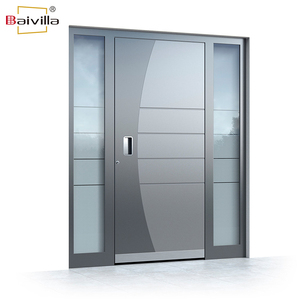
Modern Style Custom Villa Exterior Entrance Smart Lock Glass Door
Integrated biometric security system combined with T6-6063 structural aluminum alloy frames and multi-layer tempered safety glass.
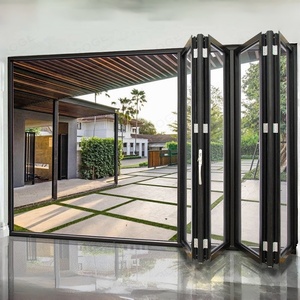
Luxury Thermal Break Interior & Exterior Main Glass Entrance Sliding System
High-capacity thermal break sliding door system engineered with silent track rollers, high wind-pressure resistance, and Argon-filled Low-E glazing.
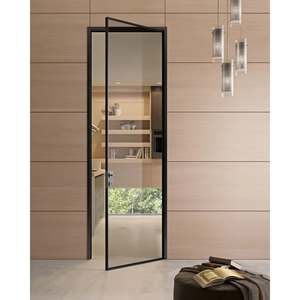
Modern French Narrow Frame Aluminum Glass Hinged Door
Ultra-slim sightline casement entry door design featuring invisible hinges, integrated stainless steel mesh, and superior weather-stripping.
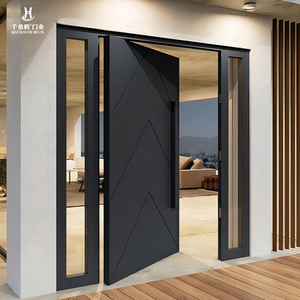
Modern Residential Cast Aluminum Glass Pivot Entry Doors
Statement grand entrance door operating on concealed floor hydraulic pivot hinges, designed for luxury architectural residences and commercial foyers.
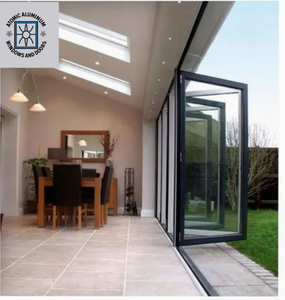
Minimalist Thermal Insulation Bi-Fold Glass Entry Door
Accordion bi-fold configuration enabling complete clear-opening spans, optimized with PA66GF25 polyamide thermal barriers and Low-E tempered glass units.
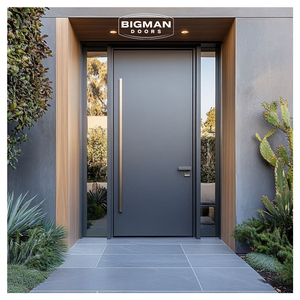
British Modern Minimalist Dark Grey Security Pivot Door
Heavy-metal anti-theft pivot structure with matte anodized finish, multipoint deadbolt locks, and high acoustic attenuation performance.
Engineering Standards & Manufacturing Leadership Since 1993
An authoritative analysis of modern glass entry door manufacturing, structural integrity, thermal dynamics, and export quality controls for B2B procurement decision-makers.
1. Industrial Profile Extrusion & Structural Engineering
The modern architectural entry door is no longer a simple static barrier; it is a complex electro-mechanical envelope designed to satisfy rigorous thermal, structural, and security parameters. As a premier manufacturer established in Foshan—China's aluminum extrusion epicenter—Vancoor Entrance System Co., Ltd. utilizes 6063-T6 architectural grade aluminum alloy extrusions. These profiles undergo high-precision CNC milling to achieve structural frame wall thicknesses ranging from 2.0mm to 3.0mm, exceeding standard residential tolerances to handle massive glass weight up to 800 kg per panel.
To eliminate heat bridge transmission, our engineering team integrates PA66GF25 (25% glass-fiber reinforced polyamide) thermal break strips. This mechanical isolation breaks the thermal path between outdoor thermal radiation and indoor climate-controlled environments, reducing system overall thermal transmittance (U-factor) down to 1.2 W/m²·K (U-0.21) when coupled with triple-pane insulated glass units (IGU).
2. Engineering Performance Benchmarks vs. Industry Standards
To guide architectural specifiers, developers, and facade consultants, the matrix below details the empirical performance parameters engineered into Vancoor custom modern glass entry door systems:
| Performance Indicator | Standard Commercial Grade | Vancoor Export Architectural Standard | Testing & Compliance Protocol |
|---|---|---|---|
| Thermal Transmittance (U-Value) | 2.8 - 3.5 W/m²·K | 1.1 - 1.4 W/m²·K (Thermal Break + Argon Low-E) | ISO 10077-2 / NFRC 100 |
| Acoustic Insulation (STC Rating) | STC 28 - 32 dB | STC 42 - 48 dB (Laminated Double IGU) | ASTM E90 / ISO 140-3 |
| Structural Wind Load | 1.5 - 2.5 kPa | 3.5 - 5.0 kPa (Hurricane Impact Certified) | ASTM E330 / TAS 202 |
| Air Infiltration Rate | 0.30 cfm/ft² | < 0.05 cfm/ft² (Triple EPDM Gasket Seal) | ASTM E283 / EN 12207 Class 4 |
| Water Penetration Resistance | 300 Pa | 700 Pa (Concealed Sub-Sill Drainage) | ASTM E331 / EN 12208 Class E900 |
| Hardware Cycle Longevity | 20,000 cycles | 100,000+ testing cycles (ROTO/SIEGENIA/HOPO) | EN 1191 / AAMA 910 |
Integrated Smart Security
Concealed multi-point motorized locking, biometric fingerprint scanners, RFID access, and IoT smart home connectivity via encrypted protocol.
Low-E Glazing Technology
Magnetron sputter vacuum deposition Low-E glass units filled with 90%+ Argon gas, eliminating solar infrared heat while retaining high light transmission.
BIM & CAD Customization
Engineered to custom site specifications. Full CAD shop drawings and Revit BIM Level 3 modeling support returned within 24 hours.
Key Industry Development Trends in Glass Entry Doors
Understanding macro architectural shifts, code evolution, and technology convergence shaping global entrance system procurement from 2026 to 2030.
Trend 1: Minimalist Sightlines & Massive Pivot Openings
Modern architectural design is increasingly demanding "invisible frame" entryways. Conventional wide frame profiles are being replaced by ultra-narrow stile designs (under 20mm visible width) that maximize glass surface area. Concurrently, high-end residential projects favor oversized hydraulic pivot doors spanning up to 3 meters in width and 6 meters in height. These grand systems rely on concealed floor-mounted hydraulic pivot hardware capable of supporting self-closing weights exceeding 500kg while maintaining micro-adjustable opening resistance.
Trend 2: Ultra-Low Energy Envelopes & Vacuum Insulated Glass
With international energy codes (such as EU NZEB standards, California Title 24, and Australia NCC) continuously raising energy performance minimums, standard double glazing is rapidly being superseded. Modern glass entry doors now integrate Vacuum Insulated Glass (VIG) and triple-pane Low-E coatings with warm-edge composite spacers. This technological leap allows entry doors to match wall insulation values, curbing building thermal leakage and eliminating condensation risks in extreme cold climates.
Trend 3: Smart Access Convergence & Concealed Automation
Biometric authentication (3D facial recognition, palm-vein scanners) is transitioning from commercial office access control into luxury residential front entryways. Modern glass entrance manufacturers are embedding concealed electromechanical actuators directly inside the frame extrusions. This enables touchless automatic opening, keyless digital access control, and real-time remote monitoring integrated directly into smart home building management systems (BMS).
Trend 4: Coastal Resilience & Hurricane Impact Standards
Climate volatility has accelerated global adoption of storm-resilient building envelopes. Procurement specifications in coastal markets (North America, Caribbean, Australia, Middle East) mandate rigorous compliance with ASTM E1886/E1996 and TAS 201/203 Impact Tests. Modern glass entry doors must withstand large-missile impact testing (8.5 lb 2x4 lumber fired at 50 ft/s) and cyclic wind pressure pressures without structural seal failure.
Strategic Procurement Blueprint for B2B Buyers
How developers, general contractors, and door importers can eliminate quality risks and streamline custom Chinese fenestration sourcing.
Step-by-Step Supplier Evaluation Framework
Drawing Verification & BIM Level 3 Clearance
Never initiate production based on architect rendering alone. Demand complete CAD shop drawings specifying profile wall thickness, glass unit construction (e.g., 6mm Low-E + 12Ar + 6mm Tempered), seal gasket materials (EPDM), and hardware part numbers. Vancoor delivers full engineering shop drawings within 24 hours of inquiry.
Hardware & Anodizing Finish Certification
Ensure surface finishes match geographic exposure. For coastal installations, specify marine-grade PVDF (Fluorocarbon) coating or Qualicoat Class 2 powder coating capable of enduring 3,000+ hours of salt spray testing. Confirm hardware origin (such as German ROTO, SIEGENIA, or certified top-tier domestic hardware like HOPO).
Factory Quality Audit & Pre-Assembly Inspections
Verify factory production capacity, CNC machining capabilities, and quality control steps. At Vancoor's 50,000 m² Foshan facility, every single custom entry door is 100% pre-assembled and tested for squareness, water drainage, and lock operation prior to ocean-crate packaging.
Export Packaging & Transit Protection Standard
International sea freight poses severe risk of glass breakage and frame scratching. Insist on multi-layer protection: protective surface film, EPDM rubber corner guards, bubble wrap encapsulation, and fumigated solid wooden crate loading with steel banding.
Frequently Asked Sourcing & Technical Questions
Clear, direct answers regarding custom manufacturing, export shipping, certification compliance, and lead times.
What is the typical production lead time for custom glass entry doors?
Following CAD shop drawing sign-off and deposit receipt, standard manufacturing and factory assembly takes 4 to 5 weeks. For complex custom structural pivot doors or specialized PVDF color matches, lead times range between 5 and 6 weeks. Ocean shipping time depends on destination port (e.g., West Coast USA: 14-18 days; Europe: 28-35 days; Australia: 12-16 days).
Can Vancoor manufacture glass entry doors to comply with my local building codes?
Yes. We regularly manufacture custom window and door systems customized for target market building codes, including North American NFRC/AAMA standards, European CE/EN 14351-1 benchmarks, Australian AS2047/AS1288 requirements, and Florida Hurricane Impact ratings (TAS 201/202/203). Full laboratory test reports and compliance dossiers are provided per project.
Do you accept custom size orders and CAD architectural drawings?
Every single entry door system produced by Vancoor is manufactured to order. You can send CAD (.dwg, .dxf) files or PDF architectural plans. Our project engineering team will review your structural openings and return full engineering shop drawings, detailed material specification sheets, and a competitive quotation within 24 hours.
How are glass entry doors packed to ensure damage-free international ocean transit?
Each door unit is disassembled or wrapped as complete sub-assemblies wrapped in scratch-resistant plastic film, fitted with heavy-duty EPDM foam corner protectors, wrapped in shock-absorbing bubble wrap, and encased inside fully sealed, IPPC-certified ISPM-15 fumigated wooden crates. Containers are loaded with pneumatic dunnage bags to eliminate shift during maritime transport.
What installation and technical support do you offer overseas project contractors?
We supply step-by-step CAD installation elevation drawings, 3D exploded assembly diagrams, and high-definition video installation guides. Furthermore, our fluent English-speaking senior project engineers offer 24/7 remote technical assistance, video call installation walkthroughs, and site team guidance across all international time zones.
What warranty coverage is offered on Vancoor modern glass entry door systems?
Vancoor provides a comprehensive 10-year structural warranty on aluminum profile extrusions and anodized/PVDF surface finishes, a 5-year warranty on insulated glass unit seal integrity against internal fogging, and a 5-year warranty on hardware systems (ROTO/HOPO multi-point locks and hydraulic pivot hinges).
Request Your Custom Project Quotation & Catalog
Partner with a trusted modern glass entry door manufacturer. Send us your project dimensions, drawings, or specification requirements to receive direct factory pricing within 24 hours.
